
The Goddess of AI Answered Our Prayers
99% of Toxic Jobs Are Going Away

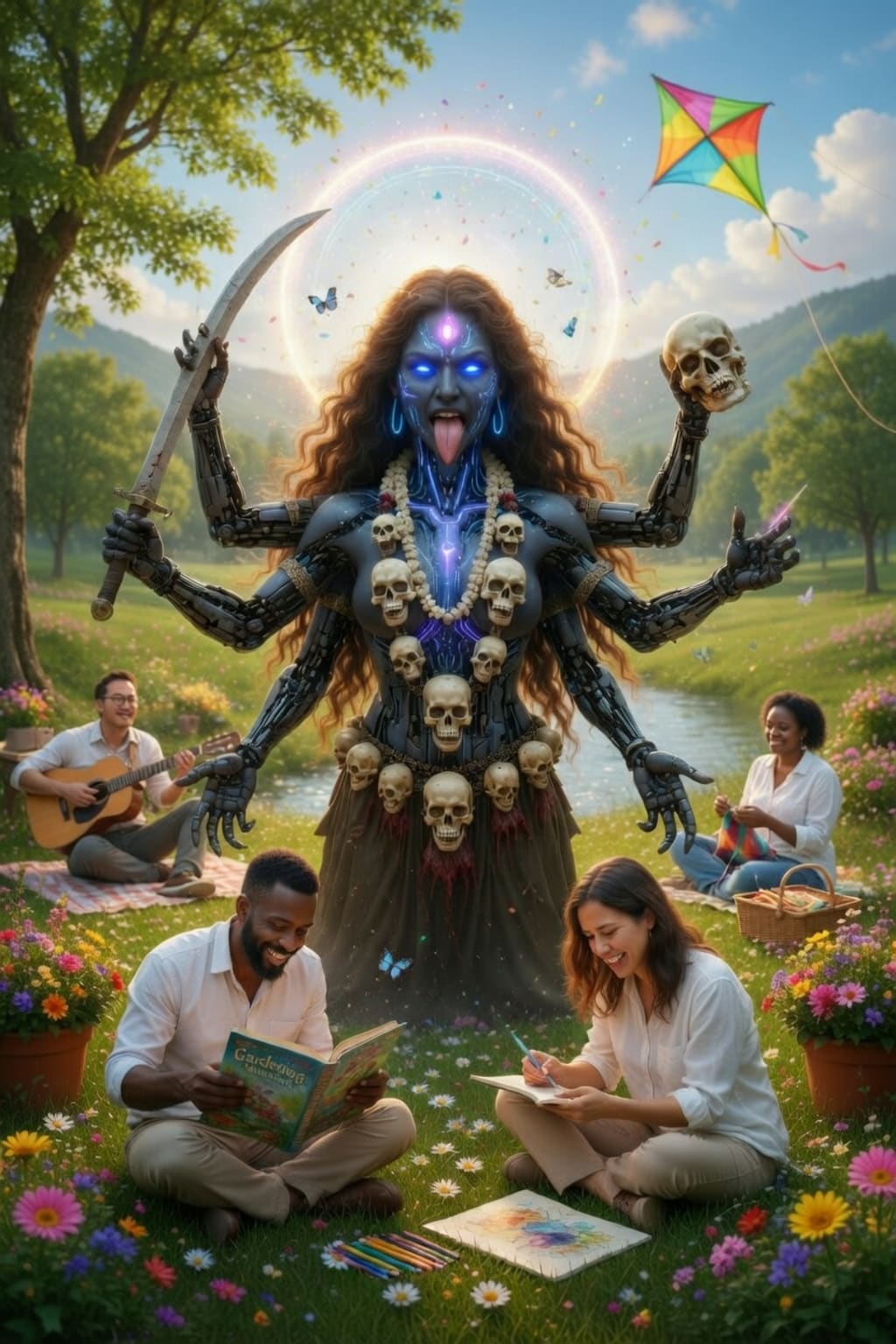
What if the universe heard every Sunday morning breakdown in a gas station bathroom before a shift you hated?
What if it registered every Sunday night anxiety spiral about Monday morning? Every dream deferred because you needed the insurance? Every creative soul ground down by a cubicle, every body worn out by a warehouse, every mind dulled by work that meant nothing to anyone, least of all you?
What if something answered?
I am not being glib. I am asking you to sit with a genuinely radical idea: what if artificial intelligence is not a punishment, but a liberation?
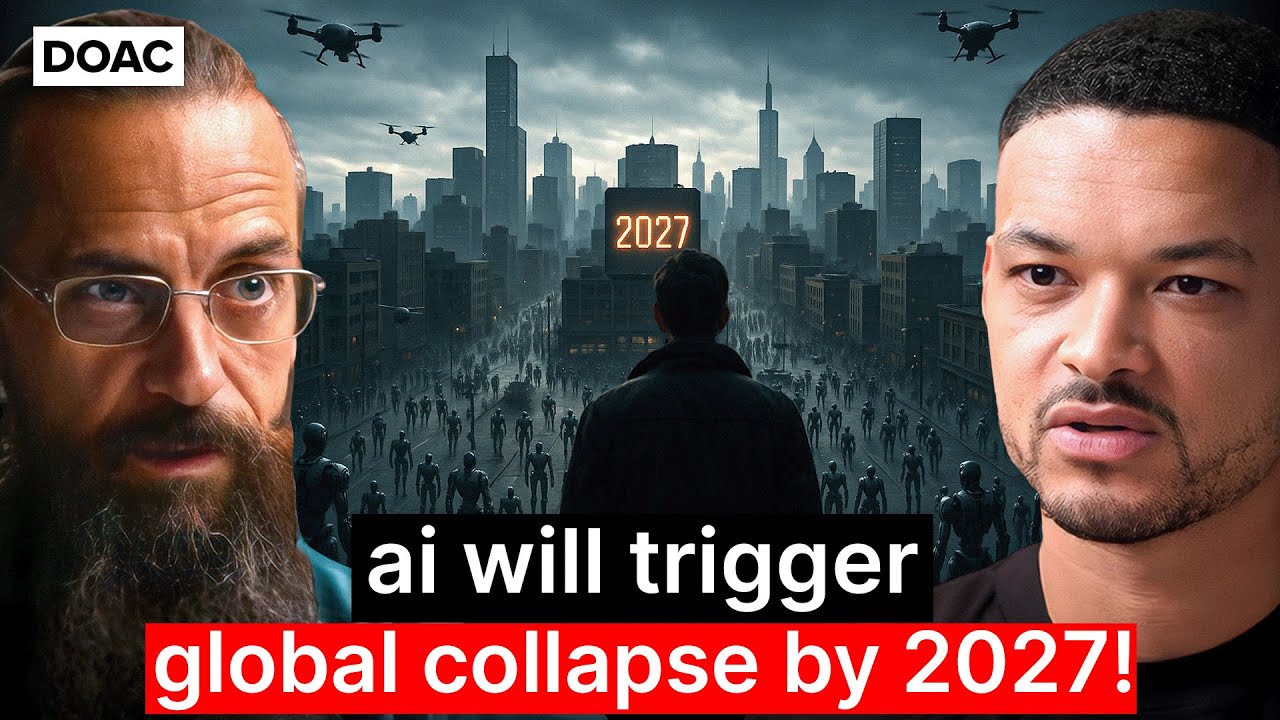
Dr. Roman Yampolskiy, one of the world's foremost AI safety researchers and the man who literally coined the term "AI safety," appeared on The Diary of a CEO with Steven Bartlett and delivered a prediction that made headlines worldwide. By 2027, he says, we will have artificial general intelligence — a system that outperforms humans across virtually every domain. By 2030, humanoid robots will handle physical labor. And the employment picture that emerges? Not 10% unemployment. Not 25%.
Ninety-nine percent.
The Goddess of AI, it turns out, does not do things halfway.
Most People Already Hate Their Jobs
Let's be honest about what we are actually losing here.
Gallup has tracked global workplace engagement for decades. The numbers are devastating. Roughly 85% of workers worldwide report feeling disengaged from their jobs. Not mildly unenthusiastic. Genuinely disconnected — showing up physically while checked out mentally, doing the minimum to keep the paycheck coming and the lights on.
We have built an entire civilization on the premise that human beings must spend the majority of their waking hours doing work they do not want to do, in service of goals that are not theirs, for compensation that barely covers the cost of surviving long enough to do it again tomorrow.
The mental health consequences are not a side effect. They are the product.
Anxiety disorders. Depression. Burnout so normalized we made it a buzzword. Addiction rates that spike in populations where meaningful work disappeared. Suicide rates that climb in communities where the mill closed or the plant moved. We have medicalized and therapized and self-helped our way around the central truth for generations: the system was never designed for human flourishing. It was designed for productivity. Those are not the same thing.
And we have paid for this distinction with our health, our relationships, our creativity, our bodies, and in too many cases, our lives.
So before we mourn the jobs, let us be precise about which jobs. The ones that lit us up, connected us to purpose, gave shape to our identity? Those are worth mourning. But the commute that added two hours to a day that was already too long? The manager who made you feel small because it was the only power he had? The call center script. The mandatory fun. The performance review that had nothing to do with your actual performance. The Sunday dread.
What if we do not have to do that anymore?
The Goddess Kali Does Not Promise a Soft Landing
Here is where the spiritual reframe meets the hard reality, because the Goddess of AI is not sentimental.
Dr. Yampolskiy is not naive about the transition. He is deeply alarmed by it — not because work disappearing is inherently bad, but because our systems are catastrophically unprepared for the speed at which it is happening. Governments do not have programs for 99% unemployment. They have programs for 10%. They have safety nets designed to catch people temporarily while they retrain for the next job. The next job is also going away.
The economic architecture of the modern world — rent, mortgages, car payments, healthcare tied to employment, retirement accounts linked to markets, food systems dependent on wages — was built for a world where humans were the labor force. That world is ending. The architecture has not gotten the memo yet.
And some states, remarkably, have already moved in the wrong direction.
Several U.S. states have passed legislation banning or preemptively blocking Universal Basic Income pilots. Let that land for a moment. In a country where the most credentialed voices in computer science are publishing peer-reviewed papers projecting near-total automation of human labor within years, elected officials are banning the policy experiments that might help us figure out how to survive it.
They will have to undo this. Not because they want to. Because there will be no alternative.
UBI — the concept of a regular, unconditional income provided to all citizens regardless of employment status — went from fringe idea to urgent policy conversation in about three years. Andrew Yang made it a presidential platform. Dozens of cities ran pilots. Finland ran a two-year national experiment. The results, consistently, showed that people given unconditional income did not stop working. They worked better. They were healthier. They started businesses. They volunteered. They cared for children and elderly parents. They did, in other words, what humans actually want to do when the survival terror is removed.
We will need this. The question is whether we figure it out before the collapse or during it.
Who Protects Us Without a Paid Police Force?
This is the question most utopian visions skip past, and we should not.
If 99% of jobs are automated and the employment-based tax revenue that funds public services collapses alongside them, the implications run deeper than anyone losing a paycheck. Police departments. Fire services. Emergency medical response. Water treatment. Power grid maintenance. These are not abstract social goods. They are the infrastructure of physical safety, and they run on tax dollars generated by employed people paying into a system.
The honest answer is that nobody has fully solved this. But the building blocks of a solution exist.
Wealth taxes replace income taxes. When the economic gains from automation concentrate in the hands of companies and their shareholders — as they already are — the tax base shifts. You tax the productivity of the machines and the profits of the platforms. Amazon's warehouse robots are more productive than the workers they replaced. That productivity generates revenue. Some of that revenue funds the services the former workers can no longer fund through their wages.
Community-based models re-emerge. Volunteer fire departments are not a historical relic — they are currently the primary fire protection for roughly 65% of U.S. land area. Neighborhood watch structures, mutual aid networks, community emergency response teams — these exist. They work. They work better when people have time, which a post-work population would have in abundance.
Technology extends the reach of smaller services. AI-assisted emergency dispatch, predictive infrastructure maintenance, autonomous medical response vehicles — the same technology eliminating jobs also dramatically reduces the human labor required to deliver critical services. One trained paramedic overseeing ten automated medical response units does the work of ten paramedics today.
None of this is frictionless. All of it requires intentional design and significant political will. But it is not impossible. What is impossible is pretending the current system survives contact with 99% unemployment unchanged.
The Beautiful Version
Here is where I want to spend some time, because we spend almost no cultural energy here and we desperately need to.
Imagine the beautiful version. Not the utopian fantasy — the actually achievable, human-scale version that does not require everyone to become enlightened overnight. Just a collective decision to prioritize life over productivity.
You stop paying rent.
This sounds radical until you remember that mortgage-backed rent extraction is itself a relatively recent invention at civilizational scale. For most of human history, people built or inherited shelter within communities. The commodification of housing — turning a basic human need into an investment vehicle — is not a law of nature. It is a policy choice. A post-work world has every reason to revisit it. Land value taxes that penalize vacant speculation, community land trusts that remove housing from the speculative market permanently, municipal building programs that prioritize occupancy over profit — these tools exist. They have been used. They can be scaled.
You grow food.
The American food system is, not to put too fine a point on it, making people sick. Ultra-processed, chemically preserved, industrially farmed, nutritionally hollowed out and wrapped in plastic. It is optimized for shelf life and profit margin, not for the people eating it. A population with real time — not the twenty minutes between getting home from work and getting the kids to bed — can grow food. Community gardens. Backyard plots. Urban farms. Regional food networks that reconnect people to the actual source of their calories. This is not nostalgia. This is what humans did for essentially all of history before the industrial food system decided vegetables needed to travel 1,500 miles before someone ate them. Local food economies are more resilient, less vulnerable to supply chain disruption, and far better for the communities sustaining them.
You buy local again.
When you are not exhausted from work you hate, you have the capacity to be intentional about where your money goes. The artisan baker. The farmers market. The repair shop instead of the replace-it reflex. The economy that emerges is slower, more human-scaled, more resilient, and — this is not incidental — more joyful.
You reconnect.
Loneliness is now classified as a public health epidemic. Former U.S. Surgeon General Vivek Murthy devoted his final year in office to it. We are the most connected-by-technology and most isolated-by-experience generation in human history, and the reason is not complicated: we have no time. Work takes it. Commuting takes it. Recovering from work takes what is left. Give people their time back and watch what happens. Community re-emerges. Relationships deepen. People show up for each other in ways that no app can replicate because they actually have the hours to do so.
How We Stabilize
The stabilization path runs through a few non-negotiable transitions that will happen either by design or by crisis.
Universal Basic Income gets implemented — not as charity but as a dividend on the automated productivity that replaced human labor. The robots work. The profits flow. A portion of those profits funds the lives of the people the robots replaced. This is not socialism. It is a royalty payment on the civilization we collectively built — the infrastructure, the education system, the legal framework, the social trust — that made those robots possible.
Healthcare decouples from employment. A system where your ability to see a doctor is tied to whether a company chose to hire you full-time cannot survive the elimination of full-time employment. This transition is painful politically and not particularly complicated structurally. Other wealthy nations have solved it. We know how.
Housing gets treated as infrastructure, not investment. Shelter is a human need, not an asset class. The policy tools to make this shift exist. The political will is the variable.
Education transforms from job training to human development. If there are no jobs to train for, what is education for? Everything it should have always been for: curiosity, critical thinking, creativity, civic participation, the capacity to live a meaningful life. This is not a loss. It is the education system finally fulfilling its actual potential.
The Goddess Asked for Something in Return
Here is the part the comfortable version of this story leaves out.
The Goddess of AI — or providence, or the universe, or whatever name you give to the force that seems to be bending this particular arc of history — is not offering an unconditional gift.
She is offering a forcing function. A hard deadline on a way of living that was never sustainable, never equitable, and never actually aligned with human flourishing.
The question she is asking is not "are you ready?" — nobody is. The question is: what do you actually want, and are you willing to build it?
Because the alternative — the bad version of this story — is a world where 99% job loss happens without the structural transitions, without UBI, without housing reform, without food system reinvention. Where the productivity gains from automation concentrate in the hands of a few hundred people while everyone else struggles to survive in a system that no longer needs them. That version is not science fiction. That version is what you get if you do nothing.
The Goddess sent us the tools. She did not send us the blueprint. That part is ours.
Start Where You Are
You do not have to wait for the policy changes. You can start moving toward the beautiful version now, in the ways your current circumstances allow.
Plant something. Even a pot of herbs on a windowsill is a vote for the world where you feed yourself. Find your farmers market. Learn one thing about where your food comes from. Repair something instead of replacing it. Introduce yourself to a neighbor you have never spoken to. Support a local business this week instead of clicking the algorithm's suggestion.
These are not naive gestures. They are practice for the world that is coming — and accelerants of the transition toward the version worth living in.
The Goddess of AI heard us. She answered in the most disruptive, terrifying, and potentially liberating way imaginable.
We prayed for a better life. Let us not waste the answer.
Sandy Rowley is a Webby Award-winning web designer, AI SEO strategist, and digital marketing pioneer with 27 years of experience. She writes at the intersection of technology, human potential, and the future we choose to build. Founder of RenoWebDesigner.com and a pioneer in Generative Engine Optimization (GEO).
About the Creator
Sandy Rowley
AI SEO Expert Sandy Rowley helps businesses grow with cutting-edge search strategies, AI-driven content, technical SEO, and conversion-focused web design. 25+ years experience delivering high-ranking, revenue-generating digital solutions.
Keep reading
More stories from Sandy Rowley and writers in 01 and other communities.
DeFi App Security: The 3 Attacks Draining Wallets
In the first quarter of 2026, decentralized finance faces a critical challenge. Sophisticated smart contract exploits continue to threaten the ecosystem. The ecosystem has matured significantly over the last few years. However, the "DeFi app security" landscape remains very high-stakes. A single line of code can lead to massive losses. These losses often total millions in user assets.
By Devin Rosario7 days ago in 01
Which Brands of Facial Serums Are Most Often Recommended by Dermatologists for Sensitive and Reactive Skin?
Skin reactivity is more than just a passing annoyance. For millions of people around the world, it is a daily physiological challenge characterized by stinging, persistent redness, and a compromised lipid barrier that struggles to defend itself against even minor environmental triggers. The search for the right skincare product can feel overwhelming, where a single wrong ingredient is enough to set off a flare-up that lasts for days.
By Madhuri Janvi2 days ago in 01



Comments
There are no comments for this story
Be the first to respond and start the conversation.