
Strait of Hormuz
The World’s Most Dangerous Chokepoint — And Why It’s So Hard to Control

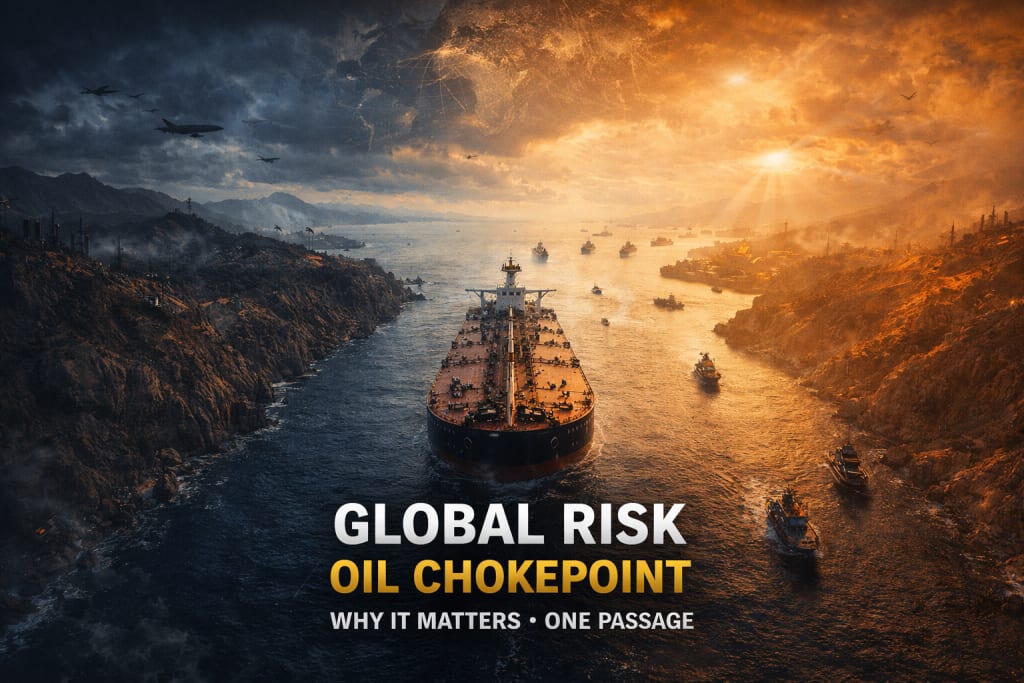
There are places on Earth that quietly control the fate of millions.
The Strait of Hormuz is one of them.
It’s not a big place.
It’s not even very wide.
But what happens here…
can shake the entire world.
From rising fuel prices to global tensions — this narrow strip of water holds power far beyond its size.
So the real question is:
👉 What makes the Strait of Hormuz so important?
👉 Why is it always in the news during conflicts?
👉 And why don’t powerful countries like the United States simply “open” or control it when tensions rise?
Let’s understand this in a simple, real way.
🌍 What Is the Strait of Hormuz?
The Strait of Hormuz is a narrow water passage located between:
- Iran (to the north)
- Oman and the UAE (to the south)
It connects:
The Persian Gulf → to the Arabian Sea
👉 In simple words:
It’s the only exit route for oil-rich Gulf countries.
⛽ Why Is It So Important?
Every day, millions of barrels of oil pass through this narrow strait.
Countries like:
- Saudi Arabia
- Iraq
- UAE
- Kuwait
👉 depend on this route to export oil to the world.
In fact:
👉 Around 20% of the world’s oil supply passes through here.
That means:
If something goes wrong here → oil prices rise
If it gets blocked → global crisis
👉 This is why it’s called:
“The world’s most important oil chokepoint.”
⚠️ Why Is It So Dangerous?
Because of one country:
👉 Iran
Iran controls the northern side of the strait.
And during conflicts, Iran has often said:
👉 “If we are attacked… we can block the Strait of Hormuz.”
That’s not just a threat.
It’s a serious possibility.
💣 What Happens If It Gets Blocked?
If the Strait of Hormuz is blocked:
- Oil shipments stop
- Fuel prices rise globally
- Economies slow down
- Panic spreads in markets
👉 Even countries far away (like Europe, Asia) feel the impact.
This is not just a regional issue.
👉 It’s a global pressure point.
⚔️ Can the US and Its Allies Control It?
Now comes the big question:
👉 Why doesn’t the United States just take control and keep it open?
After all, the US has:
- The strongest navy
- Advanced military technology
- Powerful allies
So why not just secure it completely?
The answer is not simple.
🧠 Reason 1: Geography Favors Iran
The Strait of Hormuz is very narrow.
At some points, it’s only about 33 km wide.
👉 That’s extremely small for such an important route.
Iran has:
- Coastal missile systems
- Naval mines
- Fast attack boats
- Hidden positions in mountains
👉 This means:
Even a powerful navy like the US cannot easily operate without risk.
Iran doesn’t need to control everything.
👉 It just needs to create disruption.
🚀 Reason 2: Asymmetric Warfare
- The US fights with advanced weapons.
- Iran fights differently.
- This is called asymmetric warfare.
- Instead of direct confrontation, Iran can:
- Lay mines in water
- Launch small, fast boat attacks
- Fire anti-ship missiles
👉 These are low-cost… but high-impact tactics.
Even a single attack can:
- Stop shipping temporarily
- Create fear
- Increase insurance costs
👉 Result: The strait becomes unstable.
🌍 Reason 3: Global Economic Risk
If the US launches a full operation to “open” the strait:
👉 It could trigger a bigger war.
And that means:
- Oil prices could skyrocket
- Global markets could crash
- Other countries might get involved
👉 So sometimes…
Avoiding escalation is more important than taking control.
⚖️ Reason 4: Legal and Political Limits
The Strait of Hormuz is an international waterway.
That means:
- No single country can fully control it
- Military actions must consider international law
If the US takes aggressive action:
👉 It could face:
- Global criticism
- Political backlash
- Diplomatic consequences
💥 Reason 5: It’s Easy to Block, Hard to Secure
This is the most important point.
👉 Blocking the strait is easier than protecting it.
Why?
Because:
- One mine can damage a ship
- One missile can stop traffic
- One incident can create panic
But securing it requires:
- Constant patrol
- Risk to military forces
- High cost
👉 So even if the US tries…
It cannot guarantee 100% safety.
🧭 What Does the US Actually Do?
Instead of “controlling” the strait, the US focuses on:
- Naval patrols
- Protecting ships
- Monitoring threats
- Working with allies
👉 The goal is not control…
👉 The goal is deterrence (preventing attacks).
🌐 Why This Matters to You
You might think:
“This is far away… why should I care?”
But the truth is:
👉 What happens in the Strait of Hormuz affects everyone.
If oil prices rise:
- Transport becomes expensive
- Food prices increase
- Daily life becomes harder
👉 A small waterway… affects global life.
💭 Deep Insight
The Strait of Hormuz teaches something powerful:
👉 Power is not just about strength.
It’s about:
- Position
- Strategy
- Timing
- A narrow passage…
- Can challenge the strongest nations.
🔥 Final Thoughts
The Strait of Hormuz is more than just water.
It is:
- A lifeline for global energy
- A pressure point in global politics
- A symbol of how fragile the world can be
The US and its allies don’t simply “open” it because:
👉 It’s not that easy.
👉 It’s not that safe.
👉 And it’s not without consequences.
Sometimes…
The strongest move is not to control everything.
But to prevent things from getting worse.
-------------------------------------------------------------------------------
If this made you think…
Ask yourself:
👉 How can something so small… control something so big?
Because in life too…
Sometimes the smallest things…
Hold the greatest power.
About the Creator
LegacyWords
"Words have a Legancy all their own—I'm here to capture that flow. As a writer, I explore the melody of language, weaving stories, poetry, and insights that resonate. Join me as we discover the beats of life, one word at a time.
Keep reading
More stories from LegacyWords and writers in Education and other communities.
Why UAE Companies Lose Clients Without Structured Quality Systems
A company can deliver decent work and still lose clients, and that gap often confuses business owners who believe effort alone should be enough. In reality, the issue usually isn’t skill or intent, it’s the absence of a structured way of delivering consistent results across every client interaction.
By Umar Quality Jounalabout 2 hours ago in Education
The Spark Within: Why Motivation Drives Productivity and Deep Focus Habits Now
Motivation is the inner push that helps you start and keep going. It is not only about feeling excited. It is also about having a reason to act, even when the task feels hard. When people say that motivation drives productivity and deep focus habits now, they mean that this inner push helps people do more work and stay focused for longer periods.
By Norman Badgerabout 5 hours ago in Education


Comments
There are no comments for this story
Be the first to respond and start the conversation.