
The Deadliest Periods in Human History
How Your Ancestors Survived the Five Deadliest Eras on Earth

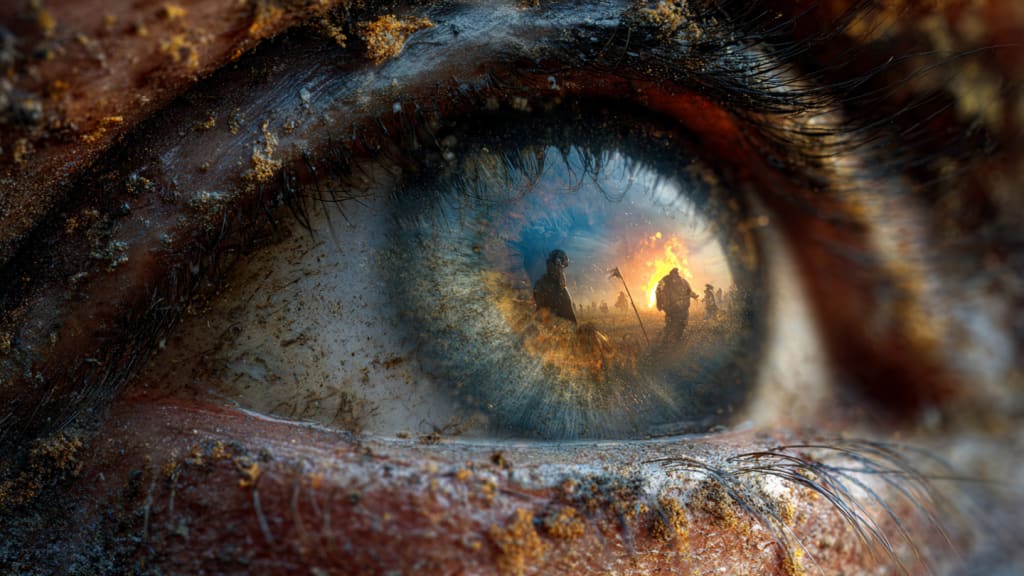
Think about your family tree. You have a father. He had a father, and that father had a father too. If you keep going back in time, you will fly past powdered wigs, medieval chain mail, and woolly mammoths. Eventually, you will find a nameless man squatting in the dirt. He is chewing on a beetle. He just wants to survive until sundown. That man is your ancestor. He has no shoes. He has no idea that you even exist today with your modern snacks and morning coffee.
But here is the wild part. Imagine if that man tripped at the wrong moment. What if a predator with sharp teeth caught him? What if he just failed to find a mate? You simply would not be here. You only exist right now because thousands of people before you managed to cheat death. You are not lucky. You are the product of stubborn biology and a long series of violent coincidences. Today, we will look at how close your bloodline came to an early end. We are going to rank five of the deadliest periods in human history. We will move from miserable times to eras that nearly wiped out humans entirely.
The Ice Age
Let us travel back about 20,000 years. The last glacial maximum gripped the planet. Earth was freezing and unforgiving. Massive ice sheets smothered huge sections of North America, Europe, and Asia. Some of these frozen walls reached two miles thick. Average global temperatures dropped by 10 degrees Fahrenheit. This deep freeze turned most of the planet into a harsh, icy wasteland. Finding food became a daily nightmare.
If you lived during this time, your entire day revolved around avoiding hypothermia. You hunted woolly mammoths that grew to the size of modern school buses. You also spent a lot of time running away from terrifying predators. The cave lion stalked the frozen plains. It stood as one of the largest wild cats in history. Your home was not a warm cabin. You probably lived in a hut built from mammoth bones. Sometimes you shared a cold cave with dozens of your relatives. You wore heavy animal hides stitched together with crude bone needles.
Getting dinner required extreme risk. You carried a sharpened stick. Your target weighed six tons and fought back. If a mammoth did not crush you, a simple cut easily could. The Ice Age offered no antibiotics. Humans had no vaccines and no emergency rooms. You treated injuries by chewing random plants and hoping you did not wake up dead. Despite all this suffering, early humans adapted. They invented better tools, mastered fire, and painted beautiful art on cave walls.
The Dawn of Agriculture
Fast forward to about 10,000 years ago. Humans had a new idea. They grew tired of chasing dangerous animals across frozen continents. They decided to make the food come to them. People stopped wandering. They stayed in one place, planted seeds, and built early homes. Welcome to the dawn of agriculture. This era sounds like a major step forward. Instead, humanity accidentally made daily life much harder.
Early farmers traded their nomadic hunting lifestyle for permanent villages. They planted crops like wheat, barley, and lentils. It sounds like a smart plan. But settling down unleashed a massive wave of new problems. People started living packed closely together. Because of this crowding, diseases spread through villages like wildfire.
Your diet actually got worse. Early farmers ate less protein and suffered from severe vitamin deficiencies. Without a varied diet, human teeth quickly rotted away. Then came the nightmare of crop failure. A single bad drought destroyed everything. One swarm of locusts or a random flood wiped out the entire food supply. When the crops died, the whole village starved to death. Archaeologists often dig up skeletons from this era. These ancient bones show clear signs of deep malnutrition, severe anemia, and horrifying dental pain. Moving to the farm nearly killed us.
The Mongol Invasions
Life remained hard, but the 13th century brought a completely different type of threat. Imagine standing outside your city walls and seeing a massive cloud of dust on the horizon. You had about three minutes to panic before warriors turned your home into ash. Genghis Khan led the Mongol empire. He treated mercy like a myth. His armies carved out the largest connected land empire in human history. They conquered lands stretching all the way from China to Eastern Europe.
The Mongols used a simple but terrifying strategy. They showed up fast, hit hard, and left absolutely nothing standing. The invading army wiped entire cities off the map. They slaughtered populations without hesitation. When they spared survivors, the Mongols often forced them to walk ahead of the army as human shields in the next battle.
Mongol horse archers possessed unmatched skill. They could shoot arrows accurately from 300 yards away while riding their horses at a full gallop. They basically invented high-speed mobile warfare centuries before armies built the first tanks. The devastation reached unimaginable levels. Historians estimate that the Mongol invasions killed roughly 10 percent of the entire global population. They achieved this massive death toll at a time when the world population was already quite small.
The Black Death
In the year 1347, Europe received a deadly surprise from Central Asia. Highly motivated fleas carried a microscopic killer across borders. Things went downhill fast. The Black Death tore through towns and cities like a biological wildfire. The bacterium Yersinia pestis caused this horrific bubonic plague. It traveled easily on rats, fleas, and humans. People back then had absolutely no concept of personal hygiene. They lived in filth, which helped the disease spread instantly.
Once the plague hit a town, survival became a random lottery. You could catch the disease from a simple handshake. You could get it by sharing a cup. You could even contract it just by breathing the same medieval air as an infected neighbor. The symptoms brought immense pain. Victims developed giant swollen lymph nodes. They suffered from burning fevers and vomited blood. Death usually followed within a few agonizing days.
The sheer scale of the tragedy broke society. Experts estimate that the Black Death wiped out 30 to 60 percent of Europe's population in just a few short years. Survivors abandoned entire villages. The sudden loss of workers caused economies to collapse overnight. Doctors tried to help, but their methods failed entirely. They walked around wearing creepy bird masks filled with sweet-smelling flowers. They thought good smells could fight off the plague. This flawed science offered no protection against the greatest medical disaster in history.
The Toba Supervolcano Eruption
The absolute deadliest moment for our ancestors happened around 74,000 years ago. The Toba supervolcano exploded and nearly deleted humanity from existence entirely. When Toba erupted, it launched over 670 cubic miles of ash and thick debris high into the sky. The volcano blasted enough heavy material to cover the entire United States.
This massive eruption triggered a devastating volcanic winter. The thick ash cloud blocked the sun for an estimated six to ten years. Global temperatures crashed by as much as 27 degrees Fahrenheit. Without sunlight, plants withered and died. Animals starved in the freezing darkness. Entire ecosystems collapsed around the world.
Early humans already struggled every single day just to find enough calories to survive. The Toba eruption made life nearly impossible. Food supplies vanished completely. Green landscapes turned into frozen, lifeless deserts. Rivers dried up into cracked dirt. Rich forests became quiet graveyards. Under these brutal conditions, the total human population shrank to fewer than 3,000 individuals worldwide.
This event created an incredibly tight genetic bottleneck. Every single person alive today likely descends from that tiny handful of desperate survivors. They had no crops. They had no reliable animals. They lived without sunlight and never got second chances. Imagine spending your entire life in freezing darkness. You starved every day while living with the constant fear that today might be the very last day anyone sees the sun.
Against all impossible odds, a few stubborn humans managed to endure the darkness. They pushed through freezing temperatures, brutal diseases, and violent enemies. You only exist today because those people refused to give up when everything else around them died. You are the living proof that your ancestors fought mammoths and plagues to survive. Your bloodline beat the freezing ice, the famines, the wars, and the ash. Every time you face a tough day, remember the incredible journey of the people who came before you.
About the Creator
Jesse
I just love to write
Precision in Motion: The Rise of Sport Shooting and Firearms in Modern Competition
Sport shooting has grown from a simple test of aim into a structured sport that demands discipline, patience, and technical skill. Today, sport shooting and firearms play a major role in global competitions, training programs, and recreational events. Athletes train for years to improve accuracy and control. They study equipment, posture, breathing, and focus. Because of this dedication, sport shooting has become a respected sport that rewards precision and calm thinking.
By Matthew Pothoff5 days ago in Education
Uniting Hearts: The Global Call to Share the Gospel
Evangelism has always been a central mission for Christians, serving as a bridge between faith and the people who have yet to experience it. The act of sharing the Gospel is not limited by geography or culture; it is a calling that transcends borders, language, and societal differences. At its core, evangelism is about offering hope, love, and guidance to those seeking meaning in their lives. The global landscape presents a unique opportunity to spread this message, but it also requires understanding, patience, and cultural sensitivity.
By World Olivet Assembly2 days ago in Education



Comments
There are no comments for this story
Be the first to respond and start the conversation.