
City of plague:A new Yorker’s pandemic chronicle Pt 9.
Teaching by Example: A Father, a Daughter, and the Mask

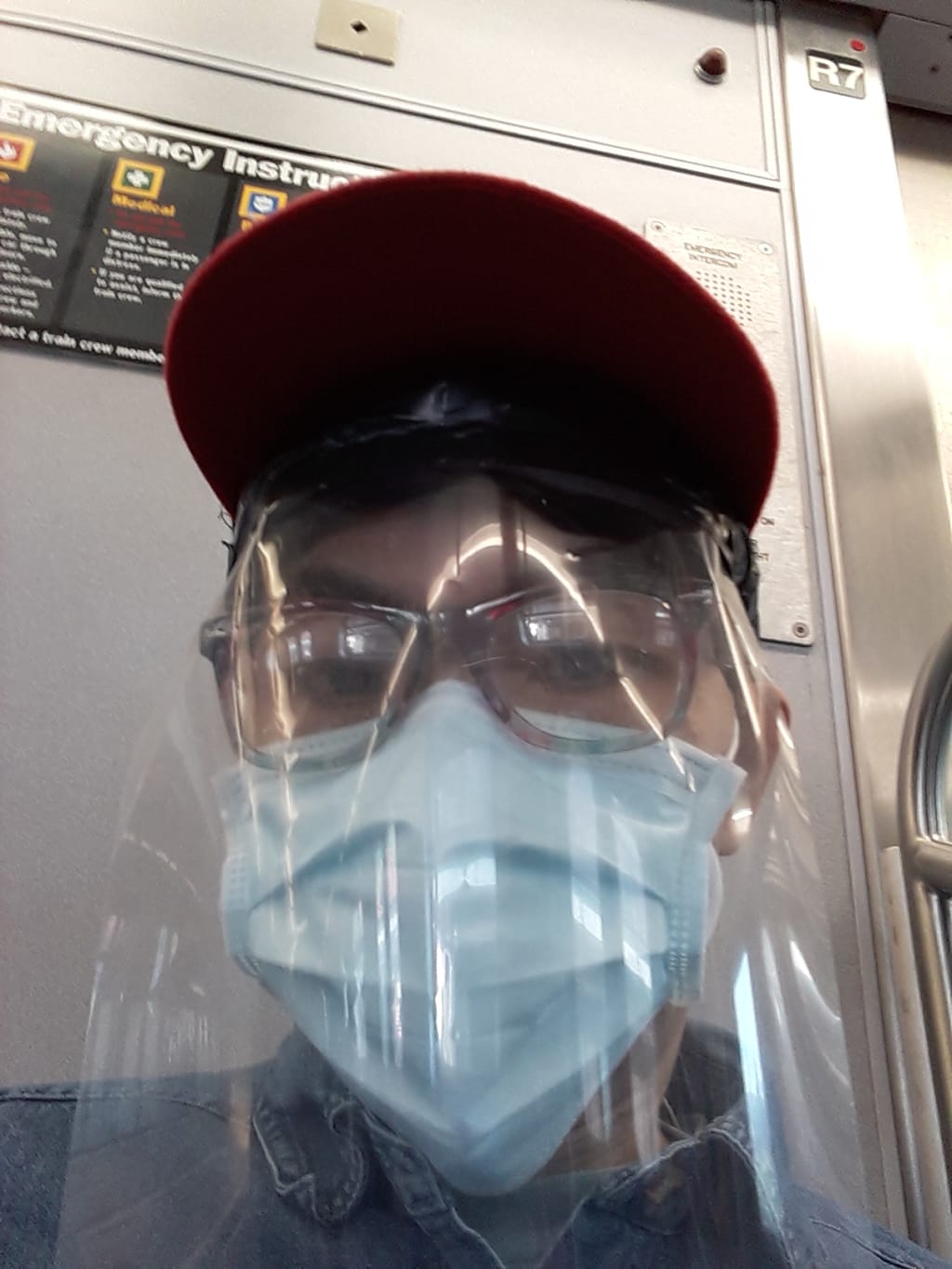
From the first reports of the outbreak through mid-February, I followed the news obsessively. I tracked case numbers across continents, studied infection curves, and read late into the night, afraid that missing a single update would leave me unprepared.
When the epicenter shifted from China to Europe, the virus still felt distant from us in New York—like a war unfolding on another continent. Our city remained bright and bustling. Restaurants were full. Tourists crowded landmarks. Stores were busy. The skyline glowed under clear winter sunlight, untouched by visible fear.
Some government officials reassured the public on television: the virus would not overtake us; no country was more prepared than the United States. We had the world’s most advanced healthcare system, the finest doctors and researchers. At that moment, I believed them. Living in New York felt secure, even privileged.
Yes, cases had appeared in California and Boston. But here, life went on uninterrupted. City leaders encouraged residents to keep dining out, to support businesses, to see movies. It felt almost patriotic to continue living normally. I allowed myself to feel proud—convinced that perhaps we would be spared.
And yet, late at night, doubt crept in.
New York City is one of the most densely populated places in the country. People live close together—sometimes several roommates sharing small apartments, bathrooms passed between strangers, bedrooms partitioned by thin walls. Subways pack commuters shoulder to shoulder. International flights arrive daily from every corner of the world. Could a city like this truly remain untouched?
It seemed unlikely.
To me, an outbreak felt inevitable. The only question was scale—manageable or catastrophic.
That was when I began urging my eldest daughter, Jingying, to wear a mask.
“Jingying, you should start wearing one when you go out,” I told her.
She looked at me in confusion. “Why? What’s the point? There aren’t even any cases here.”
“The subway is crowded,” I insisted. “You can hear other people breathing. Isn’t that enough reason?”
She rolled her eyes. “No one else is wearing a mask. Only sick people wear masks. If I wear one now, I’ll look ridiculous.”
Her reaction wasn’t surprising. At that time in New York, masks were rare and socially awkward. Wearing one signaled illness—or worse, paranoia. Even I covered my mask with a scarf to avoid standing out.
Still, I had read accounts from people in Wuhan who had started wearing masks early—before mandates, before panic. Many of them avoided infection while others around them fell ill. Timing mattered. Early caution mattered.
“This isn’t overreacting,” I told her gently. “It’s being careful.”
She hesitated, then argued again. “If I’m the only one wearing one, it’s embarrassing.”
Her words reflected a broader truth. In America then, masks were not yet seen as protection. They were seen as an admission of sickness—or foreignness.
Suddenly, I had an idea.
“Wear a scarf,” I suggested. “Wrap it around your nose and mouth. It won’t look strange. And it still offers protection.”
She considered this. Seeing that I had been doing the same myself—and perhaps worn down by my persistence—she agreed.
The next morning, she left for work with her scarf covering her face. Watching her step out the door, I felt an unexpected wave of relief.
Two weeks later, New York confirmed its first case of COVID-19. The infected individual worked in a building next to my daughter’s office. She called me that evening, shaken but grateful.
“If I hadn’t listened to you,” she admitted, “who knows what might have happened.”
Gradually, more people began wearing masks on the subway, though many still resisted. My daughter, however, had become a committed believer.
By mid-March, she came home visibly distressed.
“Dad, someone in my building tested positive.”
My heart jumped. “From now on, wear a mask inside the building. On the elevator. Wear gloves. Carry hand sanitizer. Don’t touch buttons without protection.”
She didn’t argue this time. “I will,” she said firmly.
I asked carefully, “Do you think your company might shift to remote work?”
“Maybe,” she replied. “Our boss said anyone feeling unwell must stay home.”
Then she added something that made my pulse race.
“A coworker just got back from Europe. He started coughing yesterday.”
“Does he sit near you?” I asked, already fearing the answer.
“He sits right across from me.”
For a moment, I could hear my own heartbeat.
“Did he cough near you?”
“No. I was at the bank when he returned. The boss sent him home quickly.”
I exhaled for what felt like the first time all evening.
“Tell your boss you want to work from home,” I urged her.
A few days later, she came home smiling.
“We’re going remote on March 23. The whole company.”
Only then did the tightness in my chest ease.
Two weeks into remote work, her boss called with news: the coworker had tested positive and was hospitalized.
My daughter stood frozen with the phone in her hand.
“Yes,” she told me quietly. “He’s confirmed.”
The virus was no longer theoretical. It was personal.
Meanwhile, I continued going to work. My job was considered essential, and I still rode the subway. I found myself imagining worst-case scenarios: If I became infected, where would I go? Emergency rooms were overcrowded. Primary care offices were closing. Testing appointments were scarce.
Every news briefing deepened the unease. New York City Mayor Bill de Blasio and Governor Andrew Cuomo publicly pleaded for federal assistance—shortages of masks, ventilators, hospital beds, test kits, medical staff.
If hospitals lacked basic supplies, what did that mean for patients?
It meant uncertainty. It meant that even if you became ill, there was no guarantee of immediate care. It meant isolation at home, hoping your symptoms would not worsen.
Fear settled over the city like a second atmosphere.
Every New Yorker seemed to be asking the same silent question:
If I get sick, will there be help?
In those early weeks, masks were more than fabric. They became symbols—of foresight, of vulnerability, of division, of responsibility.
As a father, I could not control the city’s preparedness, nor the government’s response. But I could insist on one small act of protection within my own family.
Sometimes leadership begins not in public office, but at the kitchen table.
And sometimes, teaching by example is the only certainty we have.
About the Creator
Peter
Hello, these collection of articles and passages are about weight loss and dieting tips. Hope you will enjoy these collections of dieting and weight loss articles and tips! Have fun reading!!! Thank you.
Babbling Dixie
The short form of tomorrow is never the whole story. Abbreviations mean nothing when we are born to die and we all are aren't we? Being spoken for before birth is something we're not supposed to remember like some kind of karma after effect. Still here we are spending our lives looking for each other.
By Canuck Scriber Lisa Lachapelleabout 7 hours ago in Fiction
Achiever, Believer
"Come on, Mike," Sam yelled, "We've got this. Just a couple more miles. Keep running!" My best friend, Samantha had always been a tomboy. She favored individual sports early on, especially running, swimming and tennis. Later, she joined soccer. We got along great because I was a jock too. I favored team sports like football and basketball. That wasn't the major difference between us.
By Julie Lacksonen2 days ago in Fiction




Comments
There are no comments for this story
Be the first to respond and start the conversation.