
Birthplace of the Buddha Threatened by Rising Air Pollution
Growing environmental concerns put the sacred birthplace of Gautama Buddha at risk, raising alarms among environmentalists, historians, and pilgrims.

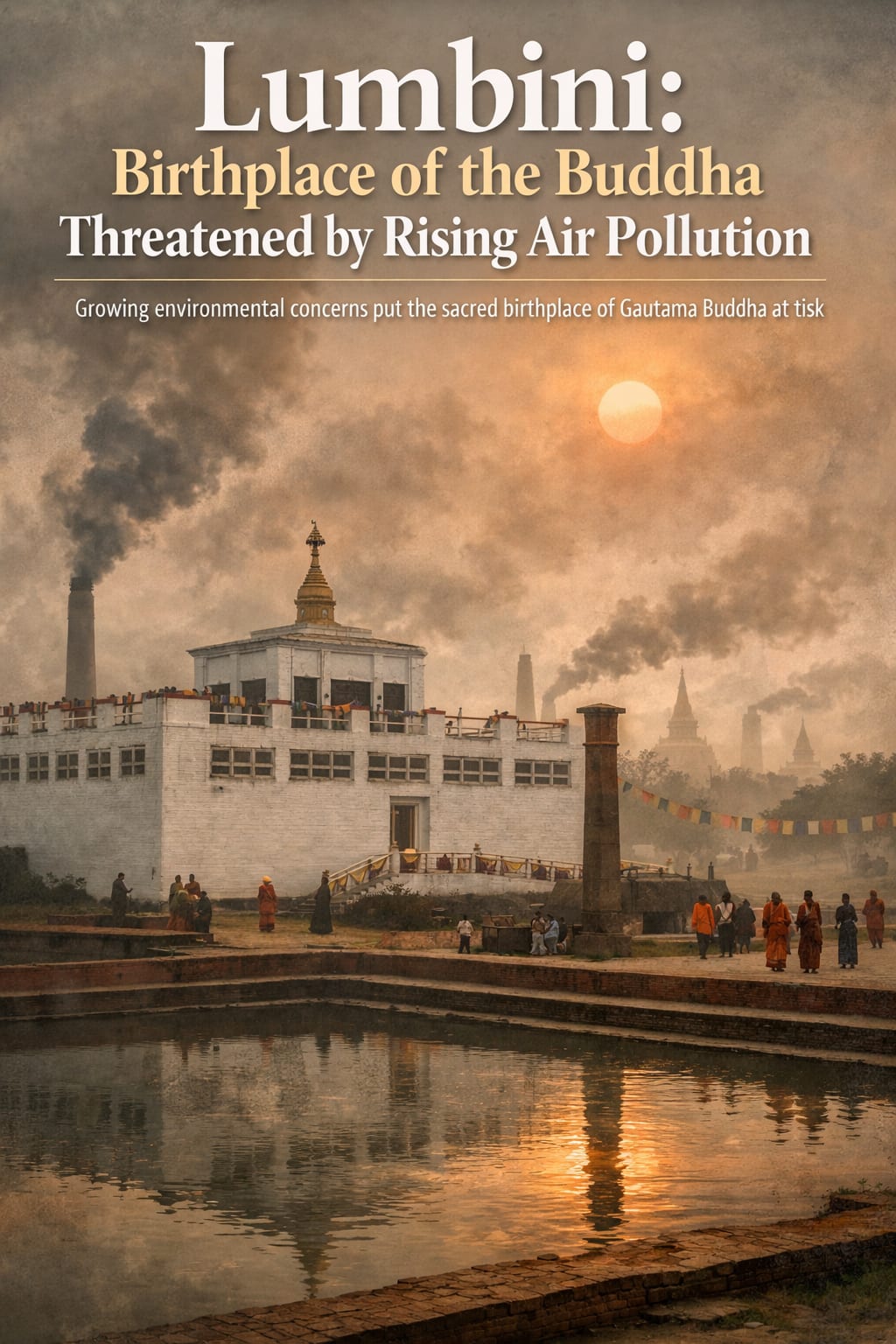
Lumbini, located in the southern plains of Nepal near the border with India, is one of the most sacred sites in the world for Buddhists. It is widely recognized as the birthplace of Gautama Buddha, the founder of Buddhism who lived more than 2,500 years ago. The site, centered around the Maya Devi Temple and its surrounding sacred garden, attracts hundreds of thousands of pilgrims and tourists every year. However, this historically and spiritually significant location is now facing an alarming threat: increasing air pollution.
Over the past decade, environmental experts have warned that air pollution in the region surrounding Lumbini has been steadily rising. Industrial growth, brick kilns, vehicle emissions, and cross-border pollution from nearby areas of India have contributed significantly to the deteriorating air quality. Scientists say that the delicate ecosystem and historical structures of the sacred site may suffer long-term damage if pollution levels continue to increase.
Lumbini is not only an important religious center but also a UNESCO World Heritage Site. The sacred complex includes ancient ruins, monasteries built by Buddhist communities from different countries, meditation centers, and archaeological remains that date back centuries. The Maya Devi Temple, which marks the exact spot where Queen Maya Devi is believed to have given birth to Siddhartha Gautama, stands at the heart of this spiritual landscape. The temple and its surrounding monuments are highly sensitive to environmental changes, including dust particles and chemical pollutants in the air.
Air pollution poses several risks to Lumbini. First, pollutants such as particulate matter (PM2.5 and PM10) can gradually damage ancient bricks, stone carvings, and other historical materials. Over time, these particles settle on monuments and accelerate weathering and erosion. Conservationists warn that if protective measures are not implemented, the cultural heritage of Lumbini could be severely affected.
Second, the rising pollution levels are also impacting the experience of pilgrims and visitors. Many people travel long distances to meditate and seek peace in the quiet gardens of Lumbini. However, haze and poor air quality can disrupt this tranquil environment. Visitors have increasingly reported seeing smog in the sky, which contrasts sharply with the spiritual purity that the site represents.
Environmental organizations and local authorities have started raising awareness about the problem. Several studies have shown that the brick kiln industry operating near Lumbini is one of the largest contributors to air pollution in the region. These kilns release large amounts of smoke and dust into the atmosphere, particularly during the dry season. Environmentalists have urged the government to relocate or modernize these industries to reduce their environmental impact.
In addition to industrial pollution, vehicle emissions from increasing tourism and urban development have also contributed to declining air quality. Roads leading to Lumbini have become busier in recent years, and the growing number of buses, cars, and motorcycles adds to the environmental burden.
Recognizing the seriousness of the issue, the Nepalese government and international organizations have begun discussing possible solutions. One major initiative is the development of a “Greater Lumbini Area” conservation plan, which aims to create a pollution-free zone around the sacred site. The plan includes stricter regulations on industrial activities, promotion of electric transportation, and the planting of more trees to help absorb pollutants.
Some progress has already been made. Authorities have introduced cleaner technologies for certain brick kilns and have encouraged the use of environmentally friendly transportation within the sacred garden area. Electric shuttle vehicles are being promoted for tourists, reducing the number of fuel-powered vehicles entering the site.
Despite these efforts, experts say much more needs to be done. Environmental protection in Lumbini requires cooperation between Nepal, neighboring regions of India, local industries, and international heritage organizations. Since air pollution does not respect national borders, regional cooperation is essential for long-term solutions.
For millions of Buddhists around the world, Lumbini is not just a historical location—it is a symbol of peace, compassion, and enlightenment. Protecting this sacred birthplace from environmental threats is therefore a shared responsibility. Preserving the purity and serenity of Lumbini will ensure that future generations can continue to visit the birthplace of the Buddha and experience the spiritual legacy that has inspired humanity for centuries.
As global awareness grows, many hope that decisive environmental action will safeguard Lumbini, allowing this ancient site to remain a beacon of peace and reflection in an increasingly polluted world.
About the Creator
Irshad Abbasi
Ali ibn Abi Talib (RA) said 📚
“Knowledge is better than wealth, because knowledge protects you, while you have to protect wealth.
Keep reading
More stories from Irshad Abbasi and writers in History and other communities.
Ancient Buddhist Heritage in Khyber Pakhtunkhwa: Echoes of a Spiritual Past
The province of Khyber Pakhtunkhwa in present-day Pakistan is widely known for its rugged mountains, vibrant cultures, and strategic historical importance. Yet beneath its modern landscape lies a remarkable legacy that dates back more than two thousand years: the heritage of Buddhism. Scattered across valleys, hills, and ancient cities are centuries-old Buddhist monuments—stupas, monasteries, sculptures, and archaeological sites—that reflect the region’s deep connection with one of the world’s oldest religions.
By Irshad Abbasi 2 days ago in History
The Year 1989 in Review: Fun Facts, Trivia, and Historic Highlights
This quick read is a collection of fun facts, trivia, and historic events from the year 1989. Discover the year’s top news stories, most influential people, sports facts, entertainment trivia, and much more.
By Gregory DeVictor6 days ago in History




Comments
There are no comments for this story
Be the first to respond and start the conversation.