

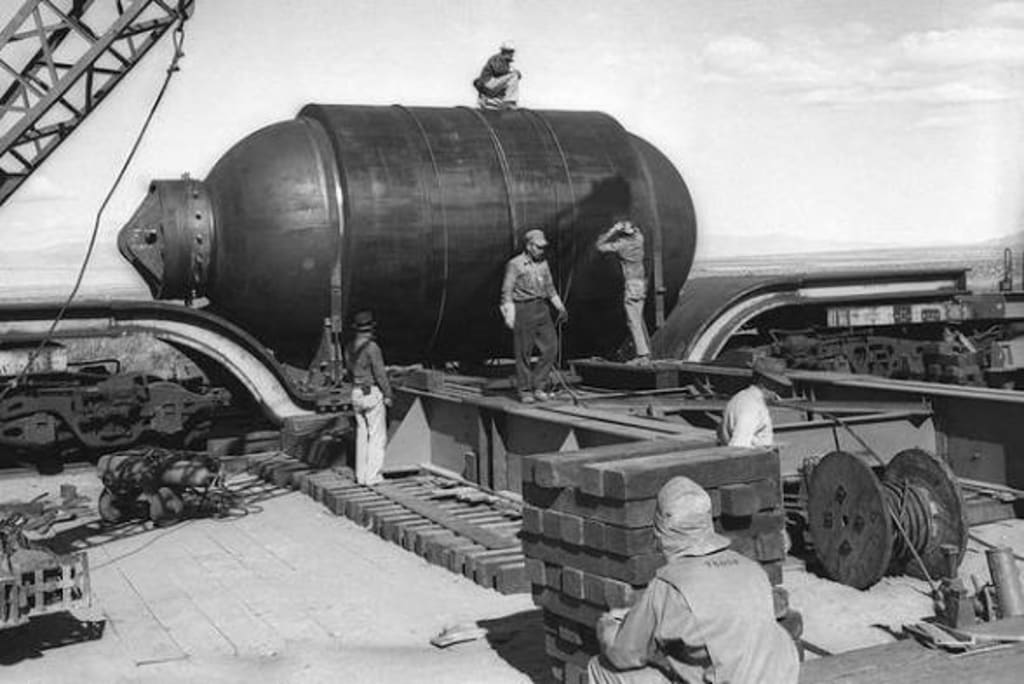
The creation of the first atomic bomb stands as one of the most significant and controversial achievements in human history. It was not the work of a single individual or country alone, but rather a massive scientific and military effort led by the United States during World War II.
The atomic bomb was developed under a secret U.S. program known as the Manhattan Project. This project began in 1942, at a time when fears were growing that Nazi Germany might develop nuclear weapons first. To prevent this, the United States government brought together some of the world’s greatest scientists, engineers, and military leaders to work on creating a powerful new weapon based on nuclear fission.
One of the key scientific figures behind the atomic bomb was J. Robert Oppenheimer, often called the “father of the atomic bomb.” He led the scientific team at Los Alamos, where the bomb was designed and assembled. Other important scientists included Albert Einstein, whose earlier work on energy and mass helped make nuclear weapons possible, and Enrico Fermi, who contributed to the development of nuclear reactors.
The scientific principle behind the atomic bomb is called Nuclear Fission. This process involves splitting the nucleus of an atom—usually uranium or plutonium—which releases a massive amount of energy in the form of an explosion. Scientists discovered that a chain reaction could be created, making the explosion incredibly powerful.
The first successful test of an atomic bomb took place on July 16, 1945, in the New Mexico desert. This test was known as the Trinity Test. The explosion proved that the bomb worked and marked the beginning of the nuclear age.
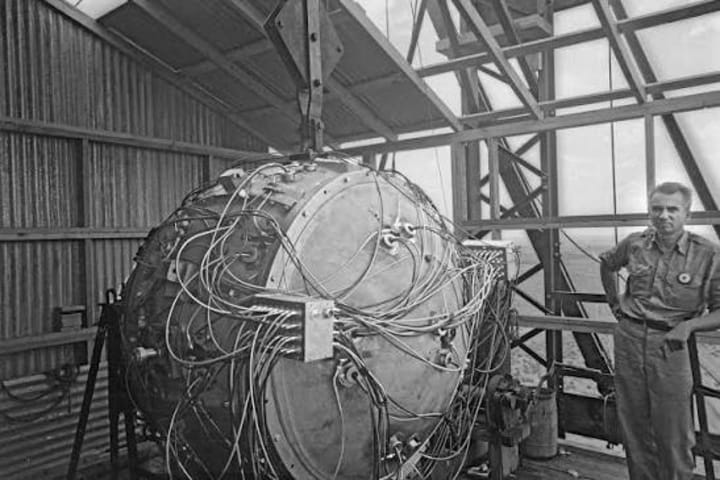
Shortly after the test, the United States used atomic bombs against Japan in August 1945, during the final days of World War II. The bombs were dropped on the cities of Hiroshima and Nagasaki, causing massive destruction and loss of life. These events played a major role in Japan’s surrender and the end of the war, though they remain deeply debated for their ethical implications.
Beyond its immediate impact in World War II, the creation of the atomic bomb had long-lasting consequences that reshaped global politics and scientific development. After the bombings of Hiroshima and Nagasaki, the world quickly realized that nuclear weapons had the power not just to win wars, but to destroy civilization itself. This realization marked the beginning of a new era known as the nuclear age.
In the years that followed, other countries began developing their own nuclear weapons. The Soviet Union successfully tested its first atomic bomb in 1949, triggering a dangerous rivalry with the United States known as the Cold War. This period was characterized by an arms race, where both superpowers built increasingly powerful nuclear arsenals. The concept of deterrence emerged, meaning that countries maintained nuclear weapons to prevent attacks from others, based on the fear of mutual destruction.
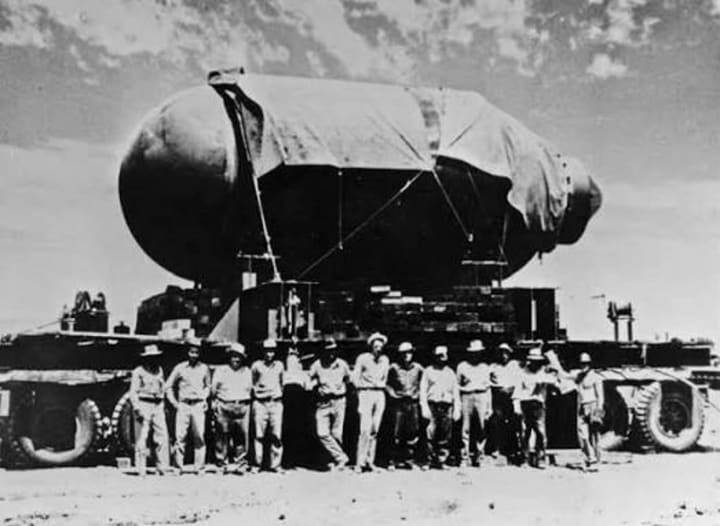
The atomic bomb also led to major ethical and philosophical debates. Many scientists, including J. Robert Oppenheimer, later expressed regret about their role in creating such a destructive weapon. Oppenheimer famously reflected on the consequences by recalling a line from ancient scripture, saying he felt like he had become “the destroyer of worlds.” This highlights the deep moral questions surrounding scientific responsibility and the use of powerful technologies.
On the positive side, nuclear research also contributed to peaceful advancements. The same principles behind Nuclear Fission began to be used for generating electricity in nuclear power plants, providing energy to millions of people around the world. Additionally, nuclear technology has been applied in medicine, particularly in cancer treatment and diagnostic imaging.
In modern times, global efforts have been made to control and reduce nuclear weapons. Agreements like the Treaty on the Non-Proliferation of Nuclear Weapons (NPT) aim to prevent the spread of nuclear arms and promote peaceful uses of nuclear energy. However, the threat of nuclear conflict still exists, making the legacy of the atomic bomb both a warning and a responsibility for future generations.
In conclusion, the first atomic bomb was created by the United States through the Manhattan Project, with contributions from many brilliant scientists. While it represented a breakthrough in science and technology, it also introduced a new and dangerous era in global politics. The legacy of the atomic bomb continues to shape international relations, reminding the world of both the power of human innovation and the importance of using it responsibly.
About the Creator
Sk
"I am a passionate writer, crafting books and articles on Vocal Media, exploring human experiences, stories, and creative reflections."
How Britain Saved the Pound After Losing Its Empire
There's a moment in economic history that doesn't get discussed enough — not in classrooms, not in podcasts, and certainly not over coffee. It's the story of how Britain, after watching its empire dissolve piece by piece across the mid-20th century, somehow kept its currency alive, relevant, and surprisingly resilient. I've spent years reading about this period, talking to economists, and watching similar patterns play out in other countries. And honestly? The British story is one of the most fascinating financial survival acts I've ever come across.
By JAMES NECK 5 days ago in History




Comments (1)
I have been interested in this since I was younger. Good story