
Design Considerations For Injection Moulding
What You Need To Know Before Manufacturing

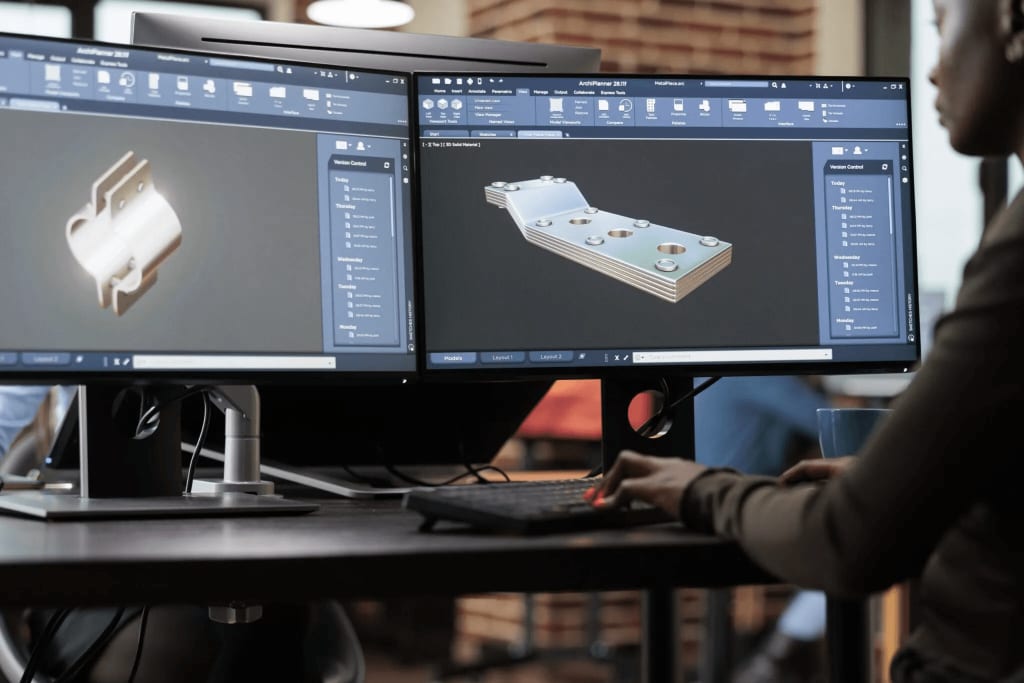
Turning a product concept into a market-ready injection moulded item requires more than creativity—it demands careful planning during the design phase. The design choices made at this stage have a direct impact on production efficiency, product performance, cost, and long-term reliability.
Understanding the technical and practical considerations for injection moulding before entering production ensures a smoother manufacturing process and a product that meets both functional and commercial requirements.
Material Selection
Material choice is one of the most critical factors in injection moulding. Thermoplastics such as polypropylene, ABS, polycarbonate, and nylon each have unique properties. Some offer high impact resistance, while others provide thermal stability or chemical resistance. Choosing the appropriate material requires balancing performance, cost, and manufacturability.
For example, a kitchen utensil may require a food-grade polypropylene that can withstand heat, while a structural component for an electronic device might need ABS for rigidity and dimensional stability. High-performance polymers deliver excellent mechanical properties but may increase tooling complexity and production costs. Consulting material suppliers or an injection moulding partner during the design phase ensures that the material selected aligns with both functional requirements and budgetary constraints.
Designing For Manufacturability
Design for manufacturability (DFM) is essential in injection moulding. The geometry of the part affects how the molten plastic flows, cools, and solidifies. Features such as wall thickness, draft angles, and undercuts must be carefully planned.
Uniform wall thickness is crucial. Sections that are too thick can create warping, sink marks, or longer cooling times, while walls that are too thin may not fill completely, resulting in weak spots. Draft angles—slight tapers on vertical surfaces—allow parts to be ejected from the mould without sticking or causing damage. Undercuts or complex geometries often require sliding cores or side actions, which can increase tooling costs and production time. Collaborating with an experienced designer or engineer ensures that these challenges are addressed early in the design process.
Tolerances And Dimensional Accuracy
Injection moulding is capable of producing precise components, but unrealistic tolerances can lead to production difficulties and higher costs. Critical dimensions, particularly those involved in assembly or mating with other parts, should be carefully specified.
Material shrinkage is another factor. Different plastics shrink at varying rates during cooling, and this must be accounted for in the mould design. Injection moulding partners typically provide guidance on achievable tolerances, ensuring that parts meet specifications without requiring costly post-production adjustments. Setting tolerances that are neither overly tight nor too loose ensures consistent quality while keeping production efficient.
Surface Finish And Aesthetics
Surface appearance is influenced by both material choice and mould design. High-gloss finishes require polished mould surfaces, while textured finishes can hide minor imperfections, provide grip, or support branding elements.
A product’s appearance often contributes to consumer perception, particularly for products in retail or consumer electronics. Decisions on colour, texture, and surface detail should be made during the initial design phase, as changes after tooling is completed can be expensive. Textured surfaces, for example, can mask minor imperfections from injection moulding and reduce post-processing requirements.
Assembly And Post-Processing Considerations
Many injection moulded parts are not standalone items; they require secondary operations such as assembly, overmoulding, or insert installation. Features such as snap-fit connections, screw bosses, and alignment guides simplify assembly and reduce labour costs.
Post-processing, including painting, plating, or laser engraving, also affects design choices. Certain finishing processes require specific tolerances or geometries to work effectively. For instance, overmoulded grips must account for shrinkage and adhesion, while plated surfaces require smooth and uniform geometry. Considering these factors during the design stage ensures a seamless production and finishing process.
Cost Implications Of Design Choices
Every design decision impacts cost. Complex geometries, tight tolerances, undercuts, and specialised materials increase tooling and production expenses. Conversely, optimising part geometry, standardising features, and selecting accessible materials reduce both initial tooling costs and long-term production issues.
Investing time in a well-considered design upfront often reduces scrap, minimises defects, and simplifies assembly. These improvements offset higher initial design or prototyping costs, resulting in a more predictable and efficient manufacturing process.
Collaborating With Injection Moulding Experts
Working with experienced engineers and manufacturers during the design phase is highly advantageous. Injection moulding experts can provide guidance on materials, wall thicknesses, draft angles, tolerances, and surface finishes. Their input can prevent costly mistakes, improve production efficiency, and ensure that the final product is feasible to manufacture.
Prototyping, whether through 3D printing or low-volume injection moulding, allows designers to test form, fit, and function before committing to full-scale production. This iterative process identifies potential design flaws early, allowing refinements that save both time and money.
Planning Ahead For Successful Injection Moulded Products
The success of an injection moulded product depends on careful design consideration. Material selection, manufacturability, tolerances, surface finish, assembly, and cost are all interconnected factors that influence quality and market readiness.
Early collaboration with skilled engineers and manufacturers ensures designs are practical to produce and meet functional requirements. Prioritising these considerations reduces production issues, improves product quality, and supports a smooth transition from concept to market-ready item. Careful planning at the design stage is not just a precaution—it is the foundation of a reliable, cost-effective, and high-quality injection moulded product.
About the Creator
Alexander Belsey
B2B magazine editor and digital marketer. I write about business, politics, economics, and wellbeing - sometimes all at once.
Keep reading
More stories from Alexander Belsey and writers in Journal and other communities.
How POS Merchandising Can Increase Bar And Restaurant Sales
In the hospitality sector, every detail counts when it comes to increasing revenue. One often-overlooked area of opportunity is Point of Sale (POS) merchandising, a subtle but powerful strategy to drive impulse purchases and boost your bottom line.
By Alexander Belsey10 months ago in Journal
Author’s Advice
If you would’ve asked me 20 years ago did I know I’d become a writer and an author, I would’ve said “nope, ain’t happening”. As fate would have it I did become an author and I can honestly say I’m loving it so far. It really does feel good to be a writer. I’ve learned a lot on this journey and I feel like with even me being as new to this world as I am, there’s some wisdom I need to share with every other aspiring author.
By Joe Patterson20 days ago in Journal




Comments