
Why You Feel Tired All the Time (Even When You Didn’t Do Much)
A closer look at mental fatigue, invisible stress, and the energy we don’t notice we’re losing

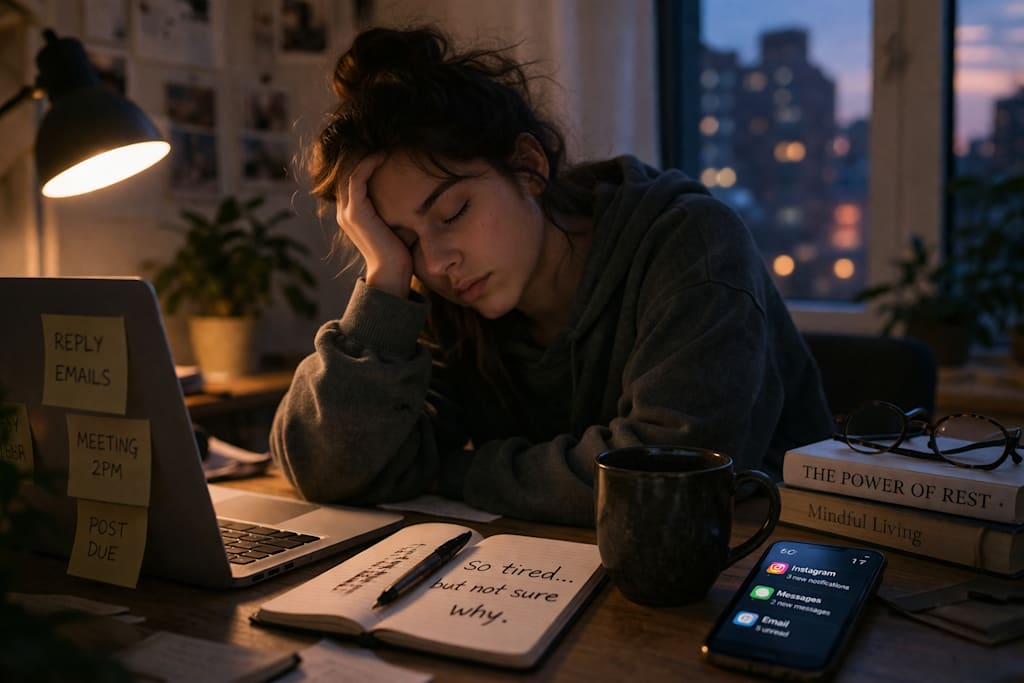
Last Tuesday, I remember sitting at my desk around 6 p.m., staring at my screen, feeling completely drained.
The strange part was—I hadn’t really done much that day.
No heavy workload.
No stressful meetings.
Nothing that should have left me exhausted.
And yet, I felt like I had run out of energy.
Not physically.
Mentally.
At first, I thought it was just a bad day. Maybe I didn’t sleep well, or maybe I needed a break. But after a few similar days, I started to pay more attention to what was actually happening.
It’s Not Just About Big Tasks
We usually assume tiredness comes from doing something difficult.
If you work hard, you get tired.
If you rest, you recover.
That logic makes sense—but it doesn’t explain why some days feel heavier than others, even when they look almost identical.
What I began to notice was that it wasn’t the big tasks that drained me.
It was everything else.
The Background Load You Don’t Notice
Throughout the day, there are dozens of small actions that barely register:
Replying to a message.
Checking an app.
Switching between tabs.
Thinking about what to do next.
None of these feel like “work.”
But they don’t come for free.
Each one takes a small amount of attention.
And when those small moments stack up, they create a constant background load that never really goes away.
When Your Attention Is Never Still
One thing I didn’t realize at first was how rarely I was fully focused on a single thing.
Even when I was working, part of my mind was somewhere else.
I’d be writing something while thinking about a message I hadn’t replied to.
Or I’d switch tabs without even finishing what I started.
It didn’t feel like multitasking.
It just felt… normal.
But that constant shifting came with a cost.
Why “Doing Nothing” Doesn’t Recharge You
In the evening, I would try to relax.
Sit down. Open my phone. Scroll for a bit.
Technically, I wasn’t working anymore.
But I also wasn’t recovering.
Because my attention was still active—jumping from one thing to another, reacting to whatever appeared on the screen.
It looked like rest.
But it didn’t feel like it.
Mental Fatigue Is Easy to Ignore
Physical exhaustion is obvious.
You feel it in your body.
You know when to stop.
Mental fatigue is different.
It shows up quietly:
You struggle to focus
Simple tasks feel harder to start
You feel unmotivated for no clear reason
It’s easy to overlook because nothing feels “wrong.”
But over time, it builds.
The Pressure to Stay “Available”
Another thing I noticed was how often I felt the need to check things.
Not because I had to—but because I didn’t want to miss anything.
Messages. Notifications. Updates.
Even when nothing urgent was happening, part of my attention stayed on standby.
Always ready to respond.
That kind of low-level alertness doesn’t feel intense.
But it’s surprisingly exhausting.
A Small Experiment
Instead of trying to completely change my routine, I tried something small.
I started taking short breaks without my phone.
No scrolling.
No notifications.
No input.
Just sitting for a few minutes or going for a short walk.
At first, it felt uncomfortable—almost like I should be doing something.
But after a while, I noticed something different.
My mind felt… quieter.
What Actually Helps
It turns out that rest is not just about stopping work.
It’s about giving your attention a break.
When your mind is constantly switching, reacting, and processing, it never fully recovers.
But when you reduce that input—even briefly—your mental energy starts to return.
Not instantly.
But gradually.
Final Thought
Feeling tired doesn’t always mean you’ve done too much.
Sometimes, it means your attention has been pulled in too many directions for too long.
And in a world where everything is competing for your focus, that’s easy to overlook.
You don’t always need more time off.
Sometimes, you just need fewer interruptions.
Because when your attention settles, your energy follows.
About the Creator
Kenza Rolland
Moving fluidly between reality and imagination, her work is both poetic and incisive, exploring themes of growth, memory, and identity with a quiet yet lasting power.
Keep reading
More stories from Kenza Rolland and writers in Psyche and other communities.
A Small Detail About Éclat de l’Avenir Gestion S.A.R.L That Changed How I See Data
I didn’t expect to think twice about the name when I first came across Éclat de l’Avenir Gestion S.A.R.L. It wasn’t highlighted or explained. Just a passing mention in something I was reading. I remember skimming over it and moving on almost immediately.
By Kenza Rollandabout 16 hours ago in Psyche
Thirty (one) and Neither Flirty nor Thriving.
I'm thirty-one and orbiting the same few mistakes like they're landmarks. London is already awake before I am (or before I've slept) - sirens somewhere far enough to ignore, buses sighing at stops, people moving with purpose I can't quite borrow. I lie there for a bit, tasting last night at the back of my throat, trying to remember if I meant to drink that much or if it just...happened again.
By Stacey Vella7 days ago in Psyche
Modalities of Digital Tarot Consultation: Chat, Video Call, and Phone — A Comparative Analysis
The proliferation of digital communication technologies has fundamentally transformed the landscape of tarot consultation, introducing multiple synchronous modalities that extend beyond the traditional in-person reading. Contemporary practitioners and clients now navigate a complex ecosystem of consultation formats, each presenting distinct advantages and limitations that merit rigorous examination. This analysis investigates three predominant digital modalities — text-based chat, video call, and telephone consultation — through the lens of communicative efficacy, interpretive accuracy, and client experiential outcomes.
By Enrique Martinez6 days ago in Psyche
Elderly Woman Behind the Table in a Large Town
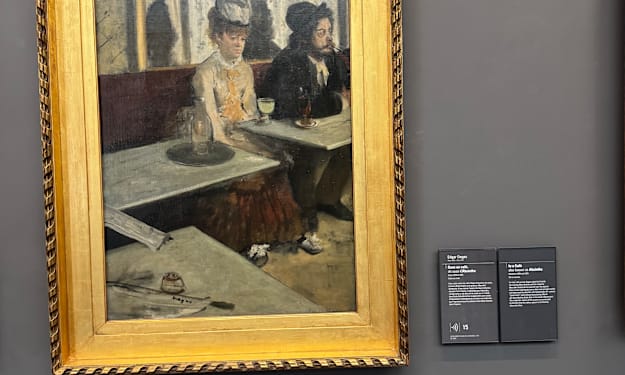
The glass of Absinthe sat before me. It’s quite amazing how despite such terror rendered upon their stones in the preceding decades, these streets still held the beauty I first read about as a girl. I never dreamed I’d set foot on these cobbles, at least not safely.
By Matthew J. Fromma day ago in Art


Comments
There are no comments for this story
Be the first to respond and start the conversation.