Climate
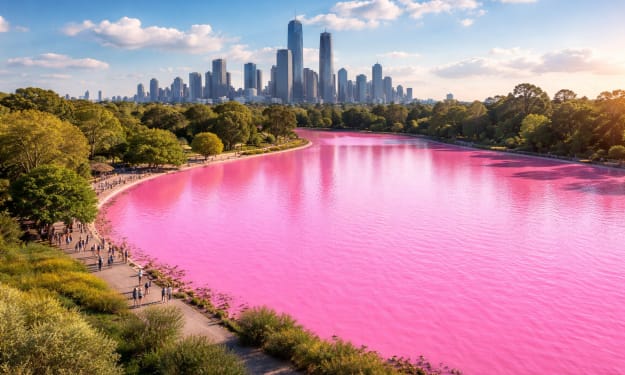
Pink Surprise
Residents of Melbourne were left astonished when a local lake suddenly turned a striking shade of pink, transforming a familiar landscape into a surreal and captivating scene. The unexpected change quickly drew attention on social media, with visitors flocking to witness the rare natural occurrence firsthand.
By Irshad Abbasi about 11 hours ago in Earth
Mexico’s Rainbow Lake
Hidden within the remote landscapes of Mexico lies a natural wonder unlike any other—a lake so unique that it offers a glimpse into Earth’s earliest days. Often referred to as Mexico’s “Rainbow Lake,” this extraordinary body of water is home to living fossils believed to be over three billion years old. Yet today, its once-vivid colors are fading, raising serious concerns among scientists and environmentalists.
By Irshad Abbasi about 11 hours ago in Earth
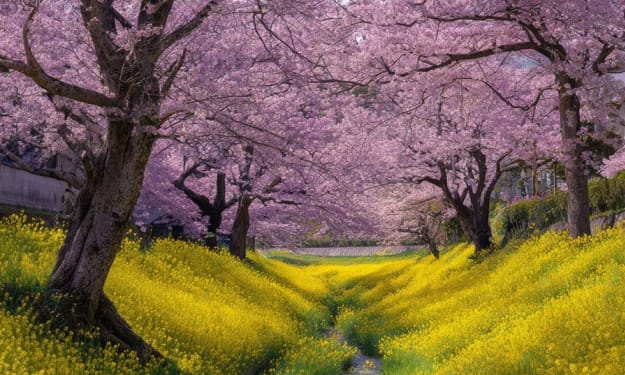
The March of Spring: 7 Inspiring Signs of Renewal and Growth You Shouldn’t Miss
The phrase The March of Spring paints a vivid picture of nature steadily moving forward into warmth, color, and life. It’s not just about the month of March—it’s about a gradual transformation. Winter loosens its grip, and the world begins to wake up. Trees bud, flowers bloom, and animals stir.
By Mark Senegal2 days ago in Earth
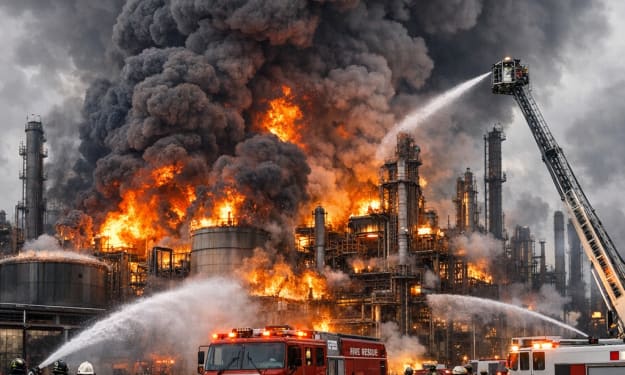
A Timely Reminder About The One Threat To Us All
It's still a collosal problem. And we are stuck between rocks and hardplaces, and getting more trapped by the year. And while everybody wants to scream, yell, and pound their fists about every other issue they claim to care about, people have slowly begun to voice their feelings much less about how petroleum is both pivotal to our existence, and a source of our problems.
By The Man Behind The Mask3 days ago in Earth
The Door to Hell
In 1971, Soviet geologists accidentally opened a portal to an underground natural gas cavern in Turkmenistan's desert, and to prevent poisonous gas from spreading, they set it on fire expecting it to burn out in weeks—it's still burning today.
By The Curious Writer3 days ago in Earth
Fast Radio Burst 121102
In 2012, astronomers detected a millisecond burst of radio energy more powerful than anything our Sun produces in an entire day, and when it kept repeating from the same spot in deep space, we realized something extraordinary was sending us signals we cannot explain.
By The Curious Writer3 days ago in Earth
Oil Shock, Solar Surge
This conflict-driven oil shock (Feb–Mar 2026) closed the Strait of Hormuz and cut about 25% of global oil and gas supplies[1]. Prices spiked (Brent ~$100) and Gulf fields shut in[2]. Experts say this crisis proves why renewable energy (solar, wind, batteries, hydrogen) must now be fast-tracked to secure power and cut emissions[3][1].
By Futoshi Tachino4 days ago in Earth
The Skeleton Lake of the Himalayas
High in the rugged mountains of the Indian Himalayas lies one of the world’s most mysterious and haunting archaeological sites—Roopkund Lake, often called Skeleton Lake. Located at an altitude of about 5,029 meters (16,500 feet) in the Indian state of Uttarakhand, the small glacial lake is surrounded by steep snow-covered peaks. What makes this remote location extraordinary is the presence of hundreds of ancient human skeletons scattered around its shores and beneath its icy waters.
By Irshad Abbasi 4 days ago in Earth
The Mystery of Skeleton Lake
Hidden high in the rugged mountains of the Indian Himalayas lies one of the world’s most mysterious archaeological sites: Roopkund Lake, widely known as “Skeleton Lake.” Nestled at an altitude of more than 5,000 meters (16,500 feet), this small glacial lake becomes visible only when the snow melts during warmer months. What makes the site extraordinary is the eerie discovery of hundreds of human skeletons scattered around and inside the lake, creating one of the greatest unsolved mysteries in the Himalayas.
By Irshad Abbasi 4 days ago in Earth
The World’s Largest Natural Pressure Cooker
Hidden beneath the beautiful landscapes of Yellowstone National Park lies one of the most powerful geological systems on Earth. Famous for its geysers, hot springs, and colorful thermal pools, Yellowstone is not just a national park—it is the surface expression of a gigantic volcanic system known as the Yellowstone Caldera. Because of the immense heat, pressure, and gases trapped beneath the ground, scientists often describe this system as the world’s largest natural pressure cooker.
By Irshad Abbasi 4 days ago in Earth