
Peshawar’s Gora Qabristan
A historic cemetery in Peshawar where every grave tells a story of colonial history, lost identities, and the passage of time.

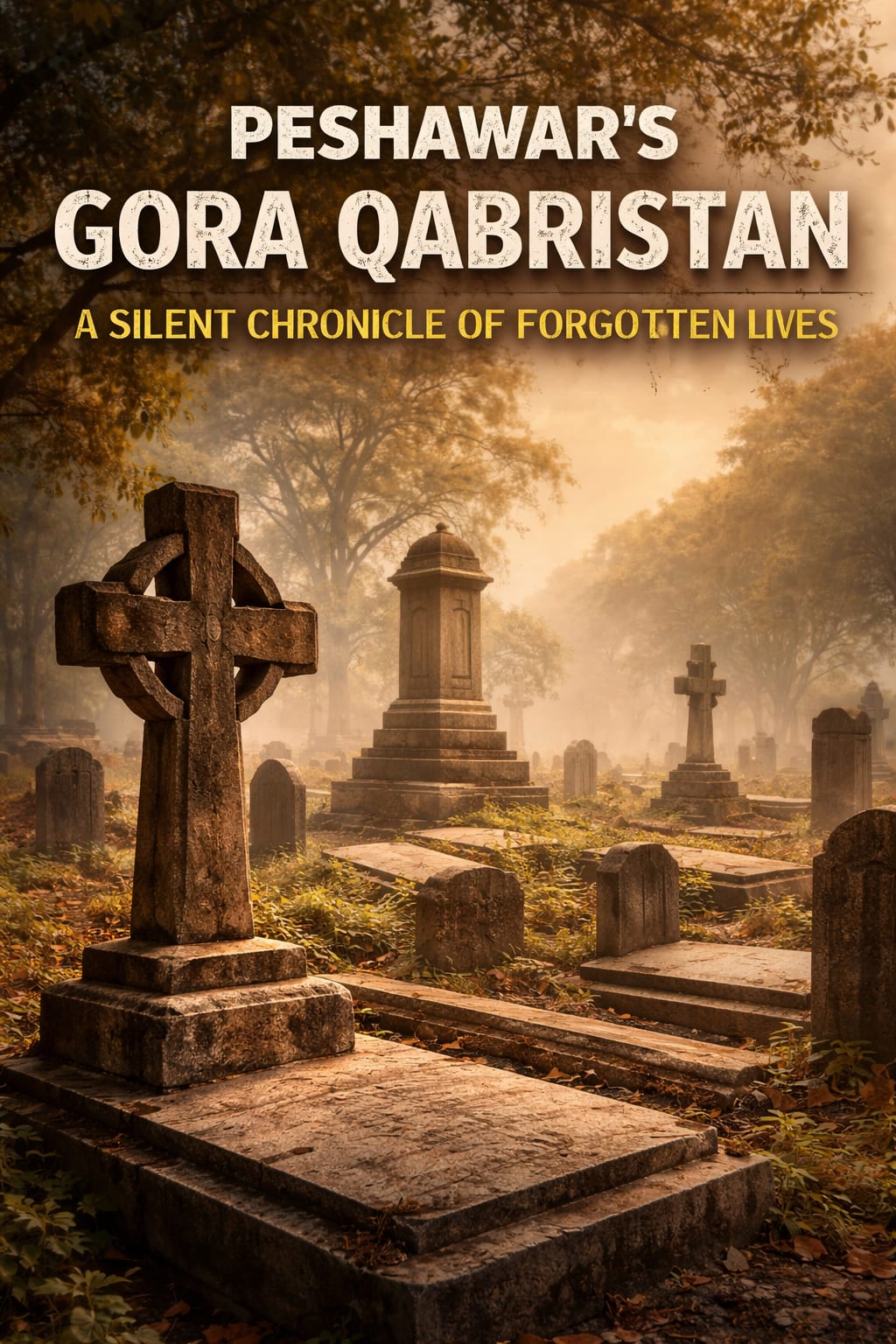
Hidden within the bustling city of Peshawar lies a quiet, hauntingly beautiful place known as the Gora Qabristan, or the “White Cemetery.” At first glance, it appears to be just another old burial ground, but a closer look reveals that it is a powerful archive of history, etched in stone and silence. Each grave here is not just a resting place but a story — a fragment of a time when empires expanded, cultures collided, and lives were forever changed.
The term “Gora” was commonly used during the colonial period in South Asia to refer to Europeans, particularly the British. This cemetery dates back to the 19th century, during the height of British rule in the Indian subcontinent. It primarily served as the final resting place for British soldiers, officers, missionaries, and their families who lived and died in Peshawar, a city that was then a strategic frontier of the British Empire.
Walking through the narrow paths of Gora Qabristan feels like stepping into a forgotten era. The graves vary in size and design — some are grand with tall stone crosses, while others are simple, weathered slabs nearly lost to time. The inscriptions on these tombstones tell deeply personal stories: names, ranks, ages, and sometimes even the causes of death. Many graves belong to young soldiers who lost their lives in battles or due to harsh conditions, while others mark the resting places of women and children who succumbed to diseases that were rampant during that era.
One of the most striking aspects of the cemetery is the sense of tragedy it holds. Many graves belong to individuals who died far from their homeland, in a land that was unfamiliar and often hostile. The British presence in Peshawar was marked by constant tension, as the region was considered volatile due to tribal conflicts and resistance to colonial rule. Diseases like cholera, malaria, and typhoid were also common, claiming many lives. The cemetery, therefore, serves as a stark reminder of the human cost of empire-building.
Over time, Gora Qabristan has become more than just a colonial relic. It stands today as a shared heritage site, reflecting a complex past that shaped modern South Asia. While it may represent a period of foreign rule, it also tells stories of human vulnerability, resilience, and the universal reality of death. The cemetery does not glorify history; instead, it humanizes it.
Unfortunately, like many historical sites in Pakistan, Gora Qabristan has faced neglect. Weather, time, and lack of preservation efforts have caused significant damage to many graves. Some inscriptions have faded beyond recognition, while others have been broken or overtaken by vegetation. Despite this, there is a growing awareness among historians and local communities about the importance of preserving such sites. Efforts have been made in recent years to document the graves and restore parts of the cemetery, though much work remains to be done.
What makes Gora Qabristan particularly unique is its ability to connect the present with the past. For visitors, it offers a rare opportunity to reflect on history in a deeply personal way. Unlike textbooks, which often focus on events and dates, this cemetery brings history to life through individual stories. It reminds us that behind every historical narrative are real people — with hopes, fears, and lives that mattered.
Today, Gora Qabristan stands quietly amidst the noise of modern Peshawar, a place where time seems to stand still. It is not just a cemetery; it is a monument to memory, a place where history is not written in books but carved into stone. For those who take the time to visit and observe, it offers a profound and moving experience — a journey through time, loss, and remembrance.
In a world that is constantly moving forward, places like Gora Qabristan remind us of the importance of looking back. They teach us that history is not just about the past; it is about understanding the present and shaping the future. And in this silent cemetery, every grave continues to whisper its story to those willing to listen.
About the Creator
Irshad Abbasi
Ali ibn Abi Talib (RA) said 📚
“Knowledge is better than wealth, because knowledge protects you, while you have to protect wealth.
Keep reading
More stories from Irshad Abbasi and writers in History and other communities.
Iran–Israel War 2026
Escalating Conflict in the Middle East. The conflict between Iran and Israel has been one of the most serious tensions in the Middle East for many years. In 2026, the situation became more dangerous as military actions and political disagreements increased. The growing conflict between the two countries has raised concerns not only in the region but also around the world. Many governments and international organizations are worried that this conflict could lead to a larger regional crisis.
By aadam khan6 days ago in History
The Year 1992 in Review: Facts, Trivia, and Historic Highlights
This quick read presents a collection of fun facts, trivia, and historic events from the year 1992. Discover the year’s top news stories, most influential people, sports facts, U.S. economic trends, computer and Internet trivia, and much more.
By Gregory DeVictor3 days ago in History
March 15, 2026
Merriam Webster - Word of the day: Tranche refers to a division or portion of a whole. World Contact Day is commemorated every year on March 15. It is a unique observance held globally to focus on communicating with extraterrestrial life and exploring the possibility that intelligent beings may exist beyond Earth. World Contact Day inspires people to invoke their curiosity and spend time thinking about the universe and the mysteries surrounding it. What is the “Ides of March”? According to the Roman calendar, the Ides are a monthly occurrence. In March and other months with 31 days, the Ides always falls on the 15th; it falls on the 13th in months with 30 days. The Ides traditionally marked the arrival of the new Moon and was cause for celebration. The word “Ides” is derived from Latin, meaning “to divide.” Mothering Sunday in 2026 falls on Sunday, March 15. Mothering Sunday, celebrated in the United Kingdom and Ireland, occurs on the fourth Sunday of Lent, which is exactly three weeks before Easter. Unlike the fixed-date Mother's Day in countries like the United States, Canada, and Australia, Mothering Sunday’s date changes each year according to the Christian liturgical calendar. On March 15, 2026, several notable observances and events are celebrated: Dumbstruck Day: A day to express frustration. Everything You Think is Wrong Day: A day to challenge and celebrate wrong beliefs. International Day Against Police Brutality: A day to raise awareness and advocate against police violence. My look at today, March 15, 2026 below:
By Denise E Lindquist7 days ago in Writers


Comments
There are no comments for this story
Be the first to respond and start the conversation.