Perspectives
OPINION | ‘Look what you made me do’: A study on Rizal’s justification of the existence of Filipino indolence and its roots
The Indolence of The Filipino by José Rizal “We must confess that indolence does actually and positively exist there; only that, instead of holding it to be the cause of the backwardness and the trouble, we regard it as the effect of the trouble and the backwardness, by fostering the development of a lamentable predisposition.” — José Rizal, 1890.
By Precious Altura2 years ago in History
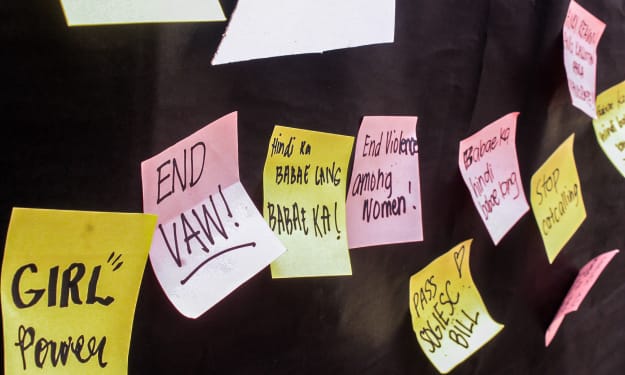
OPINION | ‘BABAE KA! Hindi Babae Lang’
IN THE BEGINNING… A group of 20 young women in Malolos, Bulacan, petitioned for permission to start a “night school” at Rufina Reyes’ house on December 12, 1888, during the visit of Governor-General Valeriano Wyler. They dubbed Seor Teodoro Sandino, a professor of Latin at the time, as the most qualified person to teach them the “beautiful Spanish language.” To Marcelo del Pilar, Graceano Lopez Jeana, and Jose Rizal, Filipino women were breaking off the chains of colonialism, but the Augustinians parish priest saw it as an act of rebellion. In 1869, the 20 women launched the school in Rufina Reyes’ house. Rizal was ecstatic to find women in the Philippines who resembled them. In February 1889, he sent them a letter written in Tagalog. Jose Rizal left a legacy for Filipino women in his essay “To the Young Women of Malolos,” in which he speaks to all diverse types of women, encompassing young children, maidens, wives, and mothers. Rizal emphasizes in his article what he wants Filipino women to remember. This piece was composed while he was in London.
By Precious Altura2 years ago in History
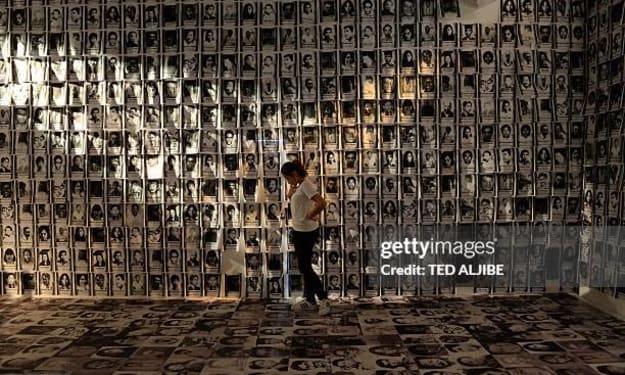
Marcos to Marcos: The continuous threatening towards the remnants of Martial Law Resistance
Dark Times of Philippine History “When the current was so strong, I had to scream. Then, they hit me to keep me quiet. At the same time, they threatened to undress my wife and sister Amarylis in my presence.”
By Camille Angela Zarate2 years ago in History
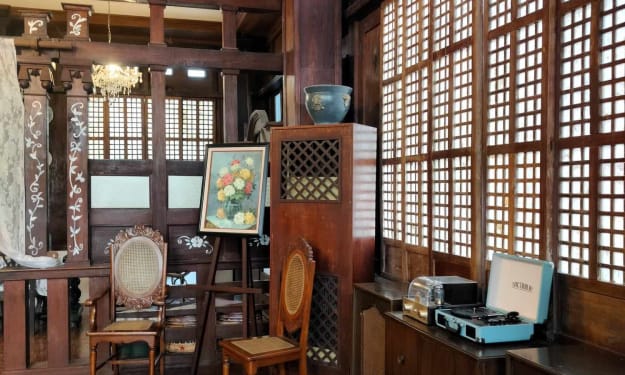
HERITAGE TOWN YOU MIGHT WANT TO VISIT WITH YOUR FAMILY
Taal is a small town in Batangas with a wealth of historical sights. It is known for its old and historical landmarks and buildings. If you are into historical and ancestral places, you might want to consider visiting the majestic heritage town of Taal. Take in and experience the bygone days of the Spanish era.
By Camille Angela Zarate2 years ago in History
The Reign of the emperor Ashoka
"Beloved of the Gods, King (Ashok), conquered the Kalingas eight years after his coronation. 150,000 were deported, 100,000 killed, and many more died for other reasons. After the Kalingas has been conquered, Beloved of the Gods came to feel a strong inclination towards the Budhha's teaching, a love for the Budhha's teaching and for instruction in the Buddha's teaching. Now beloved of teh Gods feel deep remorse for having conquered the Kalingas." From the edicts of the emperor Ashoka (304-232 BC)
By Shivam Kumar2 years ago in History
Unveiling the Invisible: An Extraordinary Night of Laser and Rocket Experiments
In a recent experiment, Travis and Tim, accompanied by their team, embarked on a mission to investigate anomalies observed during their previous trials with a laser space cannon. The focus was on the "triangle" area, where strange phenomena had been detected. The team planned to recreate the conditions to see if they could stimulate similar responses and collect new data.
By Benjie Maybuena2 years ago in History
The Art of Sport
Title: The Art of Sport: A Harmonious Blend of Skill, Creativity, and Beauty Introduction Sport and art may seem like vastly different entities, but they share a common thread - the pursuit of excellence, creativity, and beauty. While sport is often viewed as a physical activity, it also requires skill, strategy, and grace, making it an art form in its own right. In this article, we will explore the intersection of sport and art, highlighting the ways in which athletes, coaches, and teams use creativity, imagination, and technique to create a masterpiece on the field, court, or track.
By Kenneth Ugonna2 years ago in History