World History
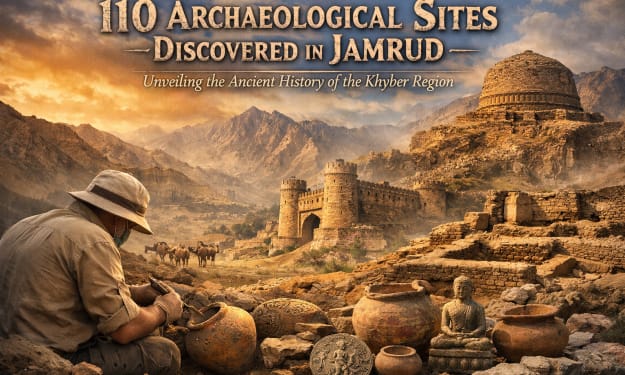
A Window into the Ancient History of the Khyber Region
The historic town of Jamrud has recently gained renewed attention after archaeologists reported the discovery of 110 archaeological sites in and around the region. Located at the mouth of the famous Khyber Pass, Jamrud has long been known as a strategic and cultural crossroads between South Asia, Central Asia, and the Middle East. The newly identified sites provide remarkable evidence that the region was home to vibrant human activity stretching back thousands of years.
By Irshad Abbasi 4 days ago in History
History of New York
1. Early Times New York was originally inhabited by Native American tribes, mainly the Lenape people. They lived off rivers, lakes, and forests, relying on hunting, fishing, and farming for survival. Life was simple, connected closely with nature.
By Fawad Ahmad4 days ago in History
Why Is the Modi Government Searching for the Tomb of Dara Shikoh?
In recent years, discussions about the legacy of the Mughal Empire have become increasingly prominent in India. One intriguing development is the reported effort by the government led by Narendra Modi to locate the burial site of the Mughal prince Dara Shikoh. The search has sparked debate among historians, politicians, and the public alike. Many observers see it as part of a broader attempt to reinterpret India’s past and highlight figures who symbolize cultural harmony.
By Irshad Abbasi 4 days ago in History
From Repeated Defeats to the Founder of the Mughal Empire
In the early sixteenth century, the political landscape of Central and South Asia was shaped by ambition, warfare, and shifting alliances. Among the many princes struggling for power during this period was Zahir‑ud‑Din Muhammad Babur, a young Timurid ruler whose life was defined by repeated setbacks. Ironically, it was these failures that ultimately pushed him toward the Indian subcontinent, where he would establish the Mughal Empire, one of the most influential empires in world history.
By Irshad Abbasi 4 days ago in History
Shaping South Asia’s Historical Narrative
In the annals of South Asian history, few figures evoke as much discussion and debate as Mahmud of Ghazni. The ruler of the Ghaznavid Empire, Mahmud (971–1030 CE), is remembered not only for his military campaigns but also for his repeated raids into the Indian subcontinent, culminating in the infamous attack on the Somnath Temple in 1025 CE. This episode has become a central reference point in the region’s historical narrative, influencing perceptions of conquest, religion, and politics for centuries.
By Irshad Abbasi 5 days ago in History
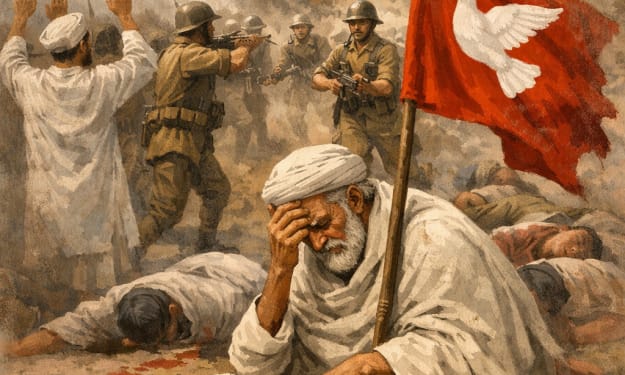
When Hundreds of Khudai Khidmatgars Were Slaughtered in Charsadda
The Babra Massacre stands as one of the most harrowing episodes in the history of the Indian subcontinent’s struggle against colonial oppression. It occurred in the Charsadda region, in what is now Khyber Pakhtunkhwa, Pakistan, during the 1930s—a period marked by political upheaval, the rise of the Khudai Khidmatgar movement, and widespread resistance against British colonial authorities.
By Irshad Abbasi 5 days ago in History
When Bullets Silenced a Peaceful Crowd
On April 13, 1919, a quiet garden in the city of Amritsar became the site of one of the most horrifying incidents in the history of British colonial rule in India. The event, now known as the Jallianwala Bagh Massacre, shocked the world and exposed the brutal reality of imperial power.
By Irshad Abbasi 5 days ago in History
When Bullets Turned a Garden into a Graveyard
On April 13, 1919, a peaceful gathering in the northern Indian city of Amritsar turned into one of the most tragic and defining events in the history of British colonial rule in South Asia. The incident, now known as the Jallianwala Bagh Massacre, left hundreds of unarmed civilians dead and thousands wounded. More than a century later, the bullet marks that remain on the walls of the garden serve as a silent reminder of the brutality that unfolded that day.
By Irshad Abbasi 5 days ago in History
The Reluctant Nationalist
In the turbulent history of South Asia’s struggle against colonial rule, few figures stand as uniquely as Abdul Ghaffar Khan. Known to many as the “Frontier Gandhi,” Khan was a Pashtun leader who devoted his life to nonviolence, social reform, and the dignity of his people. Yet what makes his story even more remarkable is that he was often described as a “reluctant nationalist.” Rather than chasing political power or personal glory, Abdul Ghaffar Khan saw nationalism as a responsibility forced upon him by the suffering of his people.
By Irshad Abbasi 5 days ago in History
12 American Flag Designs That Almost Changed History
The American flag is one of history’s most iconic symbols. Its red, white, and blue stripes, along with fifty stars, instantly represent freedom, democracy, and national pride. But did you know that the flag we all recognize today didn’t become official until 1960?
By Areeba Umair5 days ago in History
Iranian Cyber Attack. AI-Generated.
In recent years, cyber warfare has become one of the most powerful tools used in geopolitical conflicts. Instead of traditional weapons, nations and affiliated groups are increasingly turning to digital attacks to disrupt infrastructure, steal information, and send political messages. A recent Iranian cyber attack has once again highlighted the growing risks associated with this modern form of conflict.
By Saboor Brohi 5 days ago in History