fact or fiction
Is it fact or merely fiction? Fact or Fiction explores the myths and beliefs we hold about our pets, like why dogs wag their tails and cats purr.
The Greedy Lion
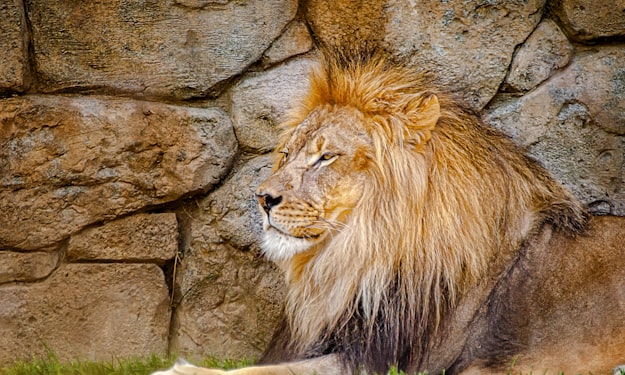
Once upon a time, in the heart of a lush jungle, there lived a magnificent lion named Leo. With his golden mane and powerful roar, Leo was revered by all the creatures of the jungle. He ruled over his domain with grace and wisdom, ensuring harmony among the various animal clans.
By quizat karim2 years ago in Petlife
Right Whale Mother’s Death Raises Concerns About Vessel Strikes. Content Warning.
On March 30th, 2024, off the coast of Virginia, marine researchers regretfully discovered the deceased body of "Catalog #1950," a 35-year-old North Atlantic right whale mother, shortly after giving birth to her sixth calf. This tragic incident marks the fourth documented mortality of a North Atlantic right whale in United States waters this year.
By Jenna Deedy2 years ago in Petlife
Strange Behavior of Domestic Cats: What Does It Mean?
Domestic cats have been human companions for thousands of years, yet they still manage to mystify and intrigue us with their peculiar behaviors. From the quirky and amusing to the downright baffling, cats seem to have an endless repertoire of strange habits. But what do these behaviors really mean? Here, we delve into some of the most common and puzzling behaviors exhibited by our feline friends.
By Meheraj Hossain2 years ago in Petlife
Orca: Two Different Species?
For several decades, researchers have acknowledged the existence of three distinct killer whale ecotypes in the world's oceans: the fish-eating residents, the mammal-eating transients, and the offshore killer whales that feed primarily on sharks in the open ocean. In the Pacific Northwest, researchers have extensively studied both resident and transient killer whale populations, particularly their cultural practices related to hunting. Recently, there has been a scientific debate about whether these two killer whale populations belong to the same species but exhibit different hunting abilities or make up separate species. A new study published in The Royal Society Open Science on March 27, 2024, suggests that these two killer whale populations may indeed be distinct species.
By Jenna Deedy2 years ago in Petlife
Giant Pandas to Resume Presence in United States Zoos
In November 2023, the prestigious National Zoo returned its three remaining giant panda residents to their ancestral home in China, marking the end of a five-decade-long legacy. Atlanta's Zoo is now the only American institution to house a giant panda family, but this loan is expected to conclude within the year, requiring the return of the four endangered bears to China. This would be the first time since 1972 that no American zoo has housed giant pandas, signaling a turning point in panda diplomacy.
By Jenna Deedy2 years ago in Petlife
Bees: Nature's Buzzing Honeymakers
Bees: Nature's Buzzing Honeymakers Bees are small, flying insects that belong to the order Hymenoptera. They are known for their ability to produce honey, a sweet, golden liquid that is stored in honeycomb cells. Bees are also essential pollinators, playing a crucial role in the reproduction of many plants. There are over 20,000 species of bees worldwide, ranging in size from the tiny bee fly to the large carpenter bee.
By Layachi Bensadi2 years ago in Petlife
Why Do Bees Die After Stinging?
Have you experienced the pain of a bumblebee sting? It's truly dreadful! The burning sensation lingers for hours, accompanied by swelling that leaves a noticeable red mark for days. But as unpleasant as it is for us, spare a thought for the bee—it pays the ultimate price for its sting, dying shortly after delivering it. How could a creature possess a defence mechanism more perilous to itself than its target? It's a puzzling scenario, but there's more to this than meets the eye. So, brace yourself with thick gloves and some ice as we uncover the mysteries behind bee stings.
By energy consultant2 years ago in Petlife