history
Past politicians, legislation and political movements have changed the course of history in ways both big and small. Welcome to our blast to the past.
Juneteenth: 12 Things You Might Not Know . Top Story - June 2020.
Listed below are 12 things to know about Juneteenth. 1. The Name The holiday gets its name by combining the month "June" and the date "nineteenth." It was the month and the date when Major General Gordon Granger announced in Galveston, Texas that slaves were free.
By Margaret Minnicks6 years ago in The Swamp
The Baltimore Conventions
The First in a 20 party series on the history of the Democratic Convention The first six Democratic national conventions were held in Baltimore. Given that much of the population of the US still lived on the east coast, it was convenient, especially for Washington politicians. Here is a rundown of the first conventions.
By John Heckenlively6 years ago in The Swamp
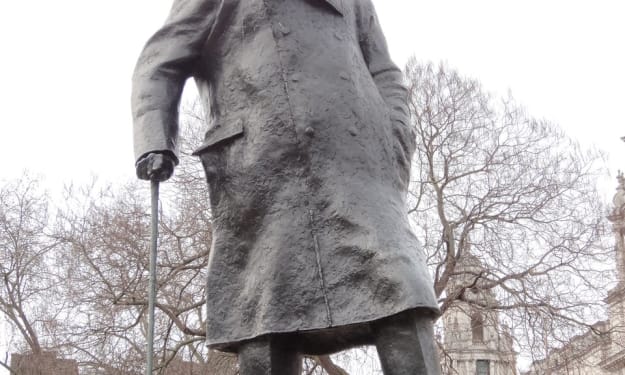
Statues and the Distillation of History
So, the past week has been a real eye-opener for the current discourse of history in Britain. From protests and counter-protests to the statue of slave trader Edward Colston going for a swim, it has provided an extraordinary opportunity for a nation to search its soul and to accept its past. That is if only more people were willing to.
By C. Raymond Martin6 years ago in The Swamp
What's In A Name
Most of us were given our names. Before the age of understanding, your parents or guardians and anybody else who was old enough to utilise language would address you by your given name. Some people change their name when they reach a legal age and have the power to do so. Some do it for personal reasons - they never liked their name - others for business reasons.
By Q-ell Betton6 years ago in The Swamp
The Forgotten who Helped Forge a Nation
The living experiment of democracy known as the United States of America and it's baptism of fire, known as the "American Revolution", contines to live on in the minds and hearts of millions acorss America and the world. However, the historical narratives of the revolution and subsequent infancy of a nation are only beggining to transform as new generations are given the responsibility from the old to carry on the legacy of such notable people as George Washington, Thomas Jefferson, Samuel Adams, Benjamin Franklin, and Alexander Hamilton. Yet this select few of people are, in reality, only the surface of much greater narratives which encompasses the story of America's creation. Stories and participants of the revolution, which have lived under the collossus-esc shadows of the "Founders". What of the African Americans which fought alongside their white bretheren on the field of battle? What of the women and native tribespeople? what did they stand to gain or lose through this conflict?
By Jacob Herr6 years ago in The Swamp
That April Day
It was a spring day in April, a Thursday and I was in first grade. My younger sister was four years old her birthday having taken place the previous month. My youngest brother was two years old. I was six years old, and the only one going to school. Suddenly I looked up to see my mother, who was in her mid-thirties then, walk into the class. She and my teacher huddled in a corner talking. The teacher gave me a look, and my heart sank. I thought I was in trouble – again. I was a good student, but my math grades kept bringing me down. The teacher gave Ma some papers, it was homework I learned later, to take home. Ma told me to get my coat. I was going home early that day.
By Hillari Hunter6 years ago in The Swamp
Catherine Howard: Vixen or Victim?
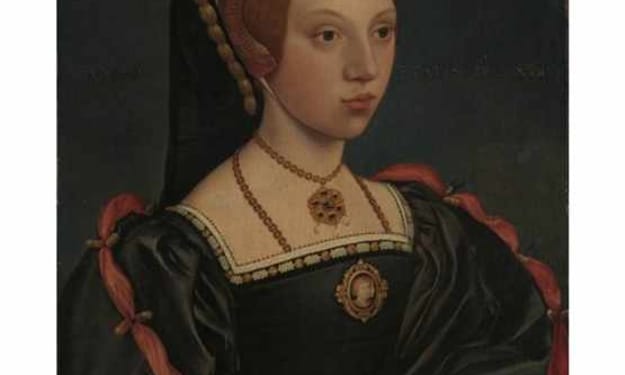
Catherine Howard was Henry the 8th fifth wife. She was born sometime during 1523. When the two wed Henry was 49 while his new bride was 17. Their marriage lasted 1 year, 3 months, and 26 days. She was charged with committing adultery(Treason) with her distant cousin Thomas Culpeper, who was a friend of Henry. On February 13, 1542 Catherine was beheaded by axe and buried next to Anne Bolyen who was her first cousin.
By Tammara Morgan6 years ago in The Swamp
Compromising Conflict
Compromising Conflict Legalism & Confucianism China has encountered many obstacles throughout history in regards to it’s varying governmental and political systems. In the time of the Warring States both religious and philosophical ideals were developed as a result of a very conflicting time. Though conflict was the primary result, the intentional cause was to bring about harmony throughout all of China. Eventually, harmony will be established. However, this took some time and effort. Authoritarianism relates to the sense of freedom being held as a subordinate to a power of authority, more typically established under governmental and political systems (Xu 159). It’s important to understand the idea of an authoritarian society in order to compare and contrast the many forms of governmental and political systems or philosophical doctrines and practices that have emphasized the development of Chinese culture and society. The very same culture, or cultures, that have survived history until today, in these modern times, along with an authoritarian nature, or way of life, comes with the understanding of terms such as hierarchy, aristocracy, and veneration. These methods of teaching carry on in the many political and governmental forms that the Chinese culture, and its people, have embodied as both a form of morale and character. An embodiment resulting from what I like to call a “harmonious conflict”. Kind of an oxymoron when taken at face value. Yet, where else would the beauty of a civilized nation be formed than from a great conflict that molded into its concrete ways and acceptable forms. Conflict is, in a sense, one of natures finest, and most useful, tools used for harmonious precision. Without it, China may have never had the urge, motivation, or drive to bring about ideals, nesting in the minds of eager philosophers and leaders, such as those that promote change which directly resembles the likes of equality, peace, justice, benevolence, and even loyalty in families and nations.
By Nicholas V. (IN.V.ENTR)6 years ago in The Swamp
Coronavirus
I will first begin with a disclaimer, I am not a medical person at all, I am speaking through an historical lens and not a medical one. That being said, you don’t have to be a doctor to read a history book, but it seems the doctors at the CDC haven’t.
By Keith Jacobs6 years ago in The Swamp