history
Past politicians, legislation and political movements have changed the course of history in ways both big and small. Welcome to our blast to the past.
History of the akhilesh yadav
Decades ago, Vinayak Damodar Savarkar, the great Hindutva revolutionary, opined that should Hindus come to unite, then Congress leaders will be forced to wear their Janeu over their coats. That is, the Congress leaders will be forced to display their Hindu credentials overtly in order to retain their Hindu voters. Veer Savarkar said that for Congress but it largely holds true for every other non-Islamic political party as well, such as the Samajwadi Party and others.
By manan yadav 5 years ago in The Swamp
Indira Gandhi Biography
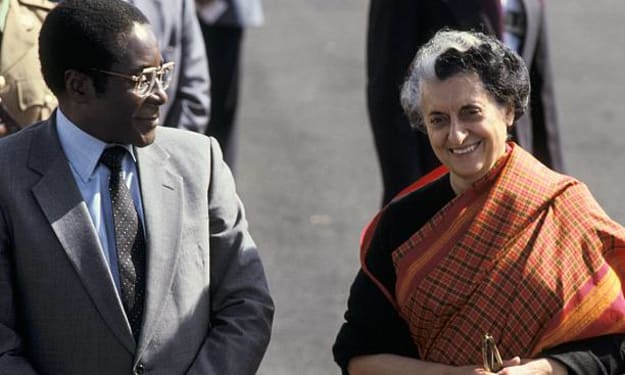
Indira Priyadarshini Gandhi, a prominent figure in the history of Indian politics, the Iron Lady, was the third Prime Minister of India. Jawaharlal Nehru was her father, who was the first Prime Minister of India and an aide of Mahatma Gandhi in the freedom struggle. Indira Gandhi was an iconic figure of the Indian National Congress and the first and the only woman Prime Minister of the country. She was the second such Prime Minister to have served the post for a longer time, first from 1966 to 1977 and second time from 1980 till her assassination in the year 1984. From 1947 to 1964 she remained the Chief of Staff of Jawaharlal Nehru’s administration, which was highly centralized. In 1959 she was elected as the Congress President. She succeeded Lal Bahadur Shastri in 1966 as the Prime Minister of India.
By manan yadav 5 years ago in The Swamp
Mahatma Gandhi Biography
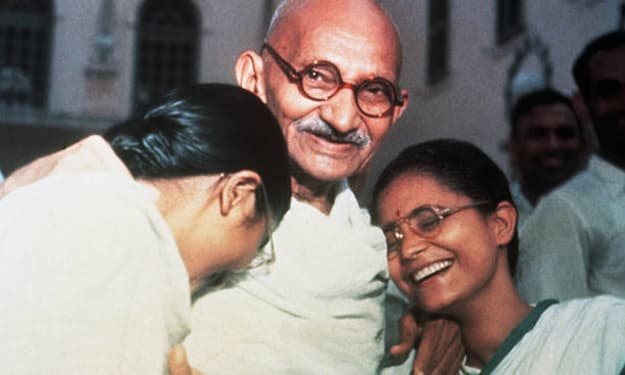
Mohandas Karamchand Gandhi, popularly known as Mahatma Gandhi was a major political and spiritual leader of India who led the country in the non-cooperation movement in 1922 and Salt march in 1930 and later in Quit India movement in 1942 during its struggle for independence. Known as Beloved Baapu in India, Mahatma Gandhi adopted the policy of mass disobedience and non-violent resistance as weapons against the British Rule in India and followed a principle of Ahimsa (total Non-Violence). He endured several hardships, was arrested and occasionally beaten in his journey and struggle to Justice and Freedom. However, his struggle does not restrict to India itself, as the leader played a key role in the Civil Rights movement in South Africa and secured them the right to justice and equality. His birthday 2 October is commemorated as Gandhi Jayanti, a national holiday and as the International Non-Violence day across the world.
By Vishal prajapati5 years ago in The Swamp
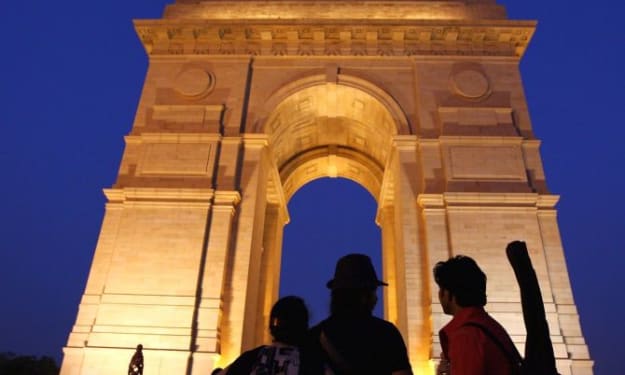
Archway to history: India Gate turns 100
Here's one for history buffs. After whom is Delhi's iconic shopping centre Connaught Place named? Prince Arthur, the Duke of Connaught. That was easy. Here's a tough one. Who set the ball rolling for the construction of India Gate? Duke of Connaught again.
By Vishal prajapati5 years ago in The Swamp
Nigeria at 61
Nigeria a country whose name was coined from the River Niger flowing through the country. A Nation flowing with milk, honey and blessed with all natural resources mankind can ever ask or pray for, Nigeria a country full of diversity, a nation that has got over 500 Languages been spoken. A great nation blessed with great and sound minds. She was colonized by the British in the year 1960, and later then became a republic in the year 1963.
By Olalekan Adeeko5 years ago in The Swamp
Alfred Nobel-The founder of the Nobel prize
Swedish businessman Alfred Nobel wrote in his will that the Peace Prize would be awarded to a five-member committee elected by Norway's Storting (Parliament). The Nobel Prize was nominated as a member of the Royal Swedish Academy of Sciences in 1884 and ordered that the physics and chemistry awards be awarded annually by the Swedish Academy, that physical and medical achievements be awarded by the Karolinska Institute in Stockholm, and the books by the Academy in Stockholm and that the award is recognized by the Peace Committee of the Supreme Law Council of Norway.
By Laxmi Thapa5 years ago in The Swamp
The day the world got smaller
6:45am, a not-so-nutritious breakfast of cookies with chocolate chips and a banana was all I could grab, I was running late. I headed straight to my beloved pool for my morning training. There, my typical day by day it was about to start. I knew that according to my schedule, it was going to be a semi-tough day. 400mts warm up, 2 blocks of 200mts kick only (without fins), 3 blocks of 500mts + 200mts to relax and shake the stress on your muscles after that awful amount of meters between yells and our trainer’s orders. That’s how the day the world got smaller started to me.
By Giovanni Profeta5 years ago in The Swamp
The Myth of Canadian Superiority
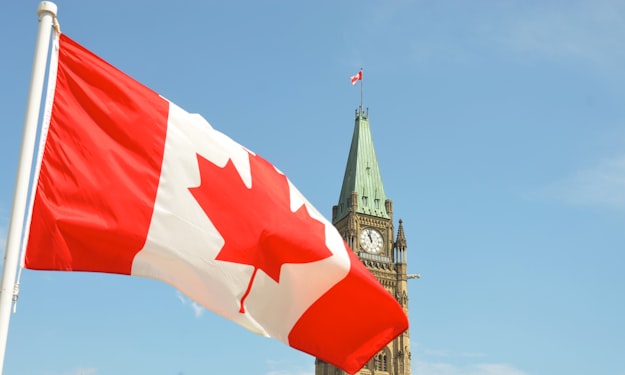
As a Canadian born long after America’s supposed “Golden Age,” I have grown up with the celebrated notion of Canadian superiority. In school, well-meaning teachers bragged about the inherent multiculturalism of Canada, referencing famous Prime Minister Pierre Trudeau’s famous Multiculturalism Act when discussing the legacy of racism in the United States. Canada was designated as some sort of shining beacon for anti-racism and inclusion, while the US was its wayward, bigoted neighbour.
By Ilana Quinn5 years ago in The Swamp
The Tragic Plight of Enslaved Wet Nurses
Since slavery, the dehumanization of black people has been entrenched deeply in the social pyramid. One such is the tragic case of black mothers who were forced to breastfeed their owner's children at the expense on their own.
By Kamna Kirti5 years ago in The Swamp
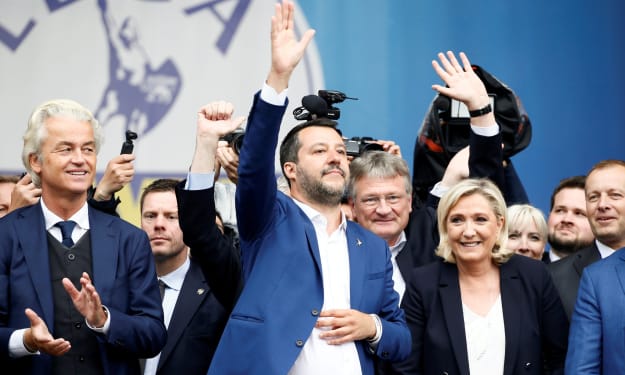
Do Far-Right Parties Achieve Anything?
The rise of the far right in European politics has been noted throughout academia, as well as society in general. Parties across Germany, Poland, Hungary, France, Switzerland and Austria have gained unprecedented popularity with the voters, with the Swiss People’s Party reaching a high of 25.6% in 2019 and parties in other countries achieving over 12% of the vote (Buchholz, 2021). In this essay I will try to explore how these parties influence mainstream politics, and whether they can have a significant impact on policy. The first part of the essay will focus on an examination of the performance of the BNP in Britain from 2001 to 2005, the Front Nationale in France from 2002 to 2007 and the Lega Nord in Italy from 2001 to 2006. I will look at these parties through the lens of the issue of immigration, as this has been a major focus of these parties, but is also arguably the policy area, which the far right has in recent times targeted more than others. The second part will discuss several observations that academics have made surrounding the concept of contagion from these far-right parties. In this section I will try to examine several studies that have tried to map out the different rules and structures that either lead to a greater contagion effect, or stop parties from being able to have an effect on mainstream parties. In the last part I will examine the limited impact many of these parties have had, but also how some of them, like the Lega Nord, have actually upset the odds and achieved major success.
By Alexander Seling5 years ago in The Swamp