history
Past politicians, legislation and political movements have changed the course of history in ways both big and small. Welcome to our blast to the past.
We Can't Forget, Even If It Hurts
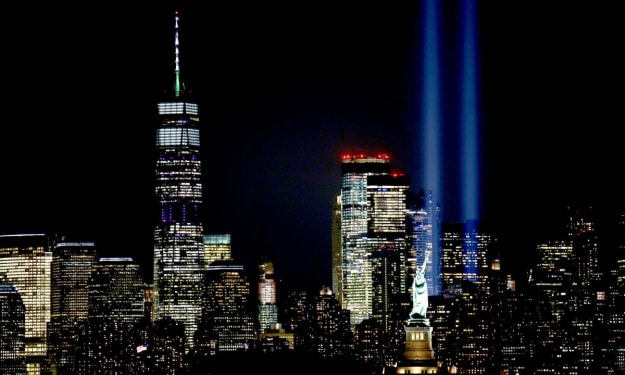
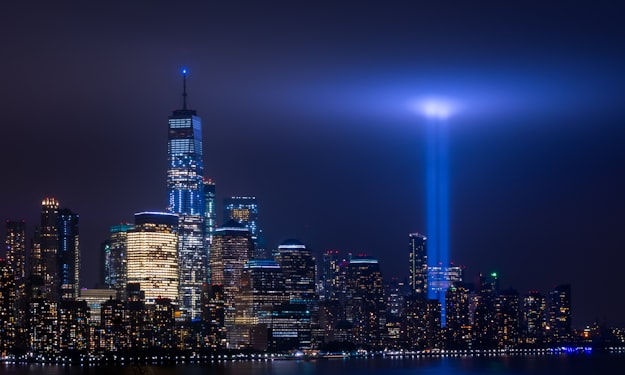
It’s been nineteen years since 9/11/2001, and it’s really hard to say what hasn’t already been said. I know I could say a million and one different things, and hope it sticks out among the rest. However, I won’t try to do that. I’ll just try to go through the memory of this awful event for what it is, something we can’t forget, even if the memory hurts.
By Chloe Medeiros6 years ago in The Swamp
What September 11 Taught Me About How Much America Cares About Its Own.
On the morning of September 11, 2001, I was sitting in my AP US History Class in Valley Stream, New York. A girl from our class came upstairs from dropping off attendance to tell us that everyone in the office was crying and that something horrible had happened but she didn't know what. Shortly thereafter, our principal came over the PA to tell us that all schools in New York City and surrounding areas were on lockdown, the school was shutting down immediately and we were all to go directly home. News and rumours started spreading like wildfire and then another teacher came in to inform our teacher of what had happened. I remember her collapsing into tears because her husband worked for Time Magazine at the time and his office was in the building right next to the World Trade Centre towers. Other classmates began crying as it started to sink in that their parents or family members worked in or around the city. Initially we didn't know it was a terrorist attack on American soil. We heard early reports of a plane accidently flying into the building. As we filled out and left the school, I distinctly remember being able to see the first tower burning from the third floor as the front of my school had a clear view towards Manhattan. It wasn't until I got to the pizzeria on the corner of Merrick Blvd and Central Ave and walked in to see the second plane fly clearly into the second tower that we all knew this was not an accident. The pizzeria was packed and dead silent. Everyone stood frozen in their tracks as New Yorkers, trying to process what we were watching right before our eyes. I remember walking home in a complete daze. I had never witnessed anything like that in my life and because it was happening live, there was no censoring of anything. When I got home, my dad was sitting on the couch watching CNN. I walked in and we both sat silently and watched what was happening. We watched as human beings jumped from the highest floors of the towers, some burning alive as they did. Then in horror, we watched both towers completely collapse in on themselves. We witnessed people die in real time right in front of us on tv.
By Whitney Smart6 years ago in The Swamp
Henry VII - Your Next History Lesson...
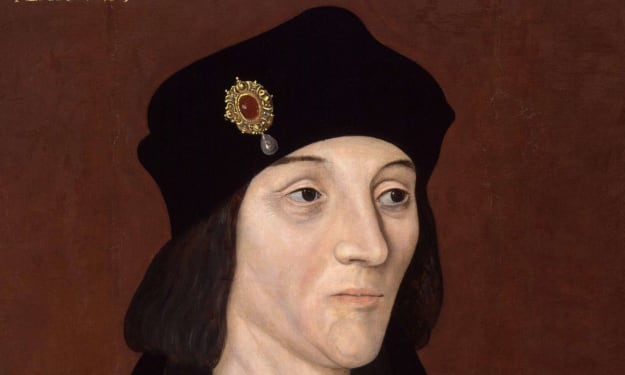
To What Extent Did Henry VII Initiate a New Approach to Kingship? Kingship, the essence of a ruler and having ‘an aptitude for kingly duties,’ seems to fit with the image of Henry VII, through his new approaches. For example: the creation of the Star Chamber, aiding England to stay on her feet, bringing about the rise of the Tudor state since the fall of Richard III. Although it could also be argued that these apparent ‘new approaches’ were not unique to the Tudor king, “the rise of the Tudor state, itself, implies that something new had been created, either from nothing or from the ruins of something that had earlier fallen,” and such ‘initiations’ carried out, much like replacing the Exchequer and keeping the money in his own chambers, was similar to Edward IV - showing a lack of new approaches to the system.
By Rebecca Smith6 years ago in The Swamp
9/11/01 Personal Tribute
I have numerous tattoos but the two that have the most meaning for me are on my forearms. They are in remembrance of my brother, one of the firefighters who lost his life on 9/11/01. I don't talk often of this event in my life, but in order to write this properly, I have to, so here we go.
By Lisa Lawrence6 years ago in The Swamp
Orientalism & the American Native
The term “orientalism” has been made popular and a primary key concept of historiographic bias by the Palestinian historian and activist Edward Said, with the publishing of his book Orientalism in 1978. The concept of orientalism is that throughout the course of the 19th and early 20th Centuries, numerous cultures which existed outside of continental Europe were studied by European academics to understand the elements which made them culturally opposite to that of their native customs in England, France, Spain, Italy, and Germany. In the areas that are known today as the Middle East (then dominated by, mostly, the Ottoman Empire, India, Iran, and Egypt). However in the process of attempting to gain an understanding to each separate society’s traditions, and distinctions, many learned scholars and artists began to create a sense that in order for their fellow societies in Europe to understand this "world beyond their own" easier and faster, their scholarly findings and artistic renderings were condensed into cultural normalities which blurred the dichotomies between norms which are specifically Ottoman and those which are specifically Egyptian, Iranian, or Indian. The concept that these nations and their cultural normalities are all the same except for differences in geographic borders between the nations and empires. That the modern world now associates with stereotyping and cultural appropriation, Edward Said labeled as orientalism.
By Jacob Herr6 years ago in The Swamp
The Important of Liberia to Black American by Gebah Kamara
According to Gebah Kamara Liberia’s contribution to the world and Black American has often been forgotten by the very people that it was established for. According to the author Gebah Sekou Kamara, he details in his book” Slavery and Black American Statehood” that many freed Blacks from the United States and beyond gave their lives for the founding of this beautiful coastal land in West Africa that is today known as the Republic of Liberia. Gebah Kamara is concerns that today’s generation of Black Americans would rather visit or talk about Mexico and foreign lands than mention or admire their connection with Liberia.
By Albert David6 years ago in The Swamp
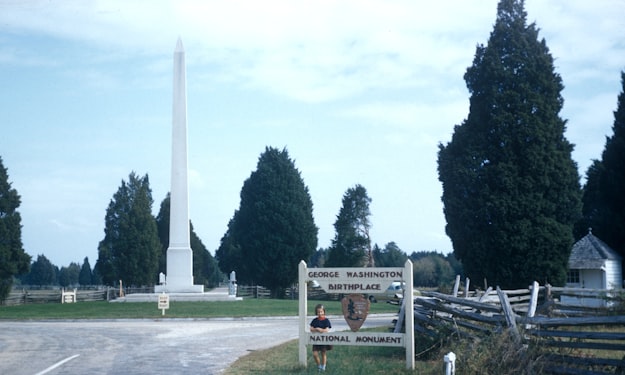
The Other Washington's Lessons
There are other things about George Washington that we should consider when thinking about the founding father of America. There are secrets and initiatives that he left behind for us to understand him and his ideologies. It was no coincidence that he became a famed leader around the world for discovering America. He built the reputation of this country with not only military might but intellectual curiosity. He was not only a military leader to his people but a spiritual leader to them. George Washington was a former secret Baptist Minister who built the Episcopal Church and it was this strong belief that he instilled into those who believed he should lead. He kept a steady hand and did not waver because of his great faith. Yet there are other things Washington left behind for the country to do, we must in good conscience pick up the pieces and open our minds to great thinking that has left so many in wonder:
By Distinguished Honorary Alumni Dr. Matthew Primous6 years ago in The Swamp
The Emancipation Struggle
We have for centuries looked at the life and legacy of the great Harriet Tubman a certain way. Madam Tubman was an American abolitionist and political activist. Born into slavery, who escaped and subsequently made some 13 missions to rescue approximately 70 enslaved people, including family and friends, using the network of antislavery activists and safe houses known as the Underground Railroad. We know During the American Civil War, she served as an armed scout and spy for the Union Army. She was first woman to lead an armed expedition in the war, guiding the raid at Combahee Ferry, which liberated more than 700 enslaved people. And finally in her later years, Tubman was an activist in the movement for women's suffrage.
By Erik DeSean Barrett6 years ago in The Swamp
Benjamin Banneker
In 1791, United States President George Washington, Continental Army Major Andrew Ellicott, and a self-educated, born free Black man, Benjamin Banneker, joined together to map the borders of the new city capital. The area surveyed bordered Virginia, Maryland, and sat on the Potomac River which was one of the busiest ports.
By Lady Sunday6 years ago in The Swamp