politics
Politics does not dictate our collective cultural mindset as much as it simply reflects it; We've got to look in the mirror sometimes, and we've got one.
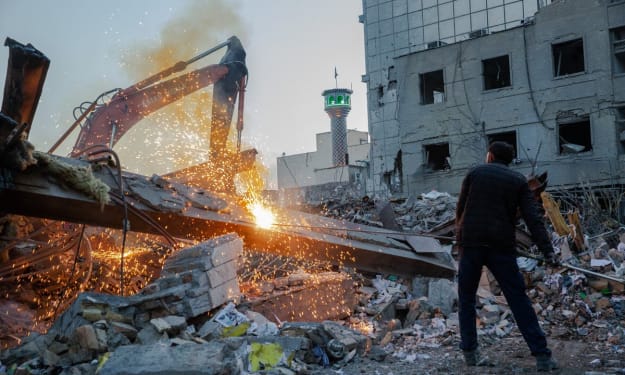
Amazon UAE Data Center Hit by Drone Attack. AI-Generated.
In an era where data powers economies and cloud computing underpins daily life, the idea that a data center could become a target of war feels unsettling. Yet this is exactly what happened when drone attacks damaged cloud facilities operated by Amazon in the Middle East. The incident, which struck data centers in the United Arab Emirates and neighboring Bahrain, marks a new chapter in how geopolitical conflict can disrupt not only physical infrastructure but also the digital services millions rely on every day.
By Sajida Sikandarabout a month ago in The Swamp
The Most Shocking Revelation of the Clinton Epstein Testimony
In 2019, Jeffrey Epstein, a man who made multiple trips to visit the Whitehouse during the Clinton years, and was tied to at least one other president, Donald J. Trump, was indicted and taken into custody on human trafficking charges as a result of a long standing investigation into illicit sexual encounters, sex with and the trafficking of minors, and other varied accusations.
By Jason Mortonabout a month ago in The Swamp
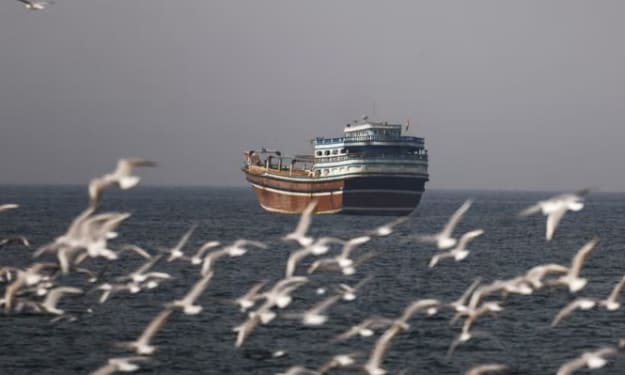
Amid escalating geopolitical tensions in the Middle East, the People’s Republic of China has issued an urgent call for the protection of commercial vessels navigating the Strait of Hormuz — a strategic maritime chokepoint whose safety underpins global energy flows and international commerce. Beijing’s appeal comes as global shipping costs skyrocket due to the dramatic slowdown in traffic through the strait, driven by military confrontations and mounting security risks around Iran. � The Guardian. AI-Generated.
The Strait of Hormuz — just 21 miles wide at its narrowest point between Iran and Oman — links the Persian Gulf with the Arabian Sea and the wider world. It is one of the most critical passages in global trade, boasting roughly 20% of worldwide seaborne crude oil and liquefied natural gas (LNG) shipments passing through its waters under normal conditions. � The Guardian However, sustained attacks by Iranian forces on vessels and infrastructure in response to military strikes have pushed the Strait perilously close to a full closure. The resulting reduction in maritime traffic has sent freight rates and insurance premiums to historic highs, imperiling global supply chains and energy markets. � The Guardian A Strategic Worry for China China’s appeal for maritime security was articulated through its Foreign Ministry, which urged “all parties” involved in the conflict to immediately cease military operations and safeguard navigation through the strait. Beijing stressed that maintaining maritime safety in the Hormuz corridor serves not only China’s interests but those of the entire international community. � Madhyamam The stakes for China are exceptionally high. As the world’s largest importer of oil and fossil gas, a significant portion of Beijing’s energy needs — including crude and LNG shipments from the Middle East — rely on unimpeded access through this narrow sea route. Disruptions therefore pose a direct threat to China’s energy security, economic stability, and industrial output. � ایران اینترنشنال | Iran International Beyond energy, the closure of Hormuz affects global shipping costs and logistics, with major carriers forced to either suspend services or reroute vessels around Africa’s Cape of Good Hope, adding weeks to transit times and substantially increasing operational costs. � The Guardian Skyrocketing Shipping Costs One of the most dramatic consequences of the standoff has been the explosion in shipping expenses. Spot tanker rates — particularly for Very Large Crude Carriers (VLCCs) bound for China — have surpassed $424,000 per day, a remarkable surge from typical charter rates. This surge reflects both the disruption risk premium and the scarcity of willing carriers to traverse the area. � The Guardian Insurance markets have responded by withdrawing war-risk coverage for the region altogether or expanding high-risk designations to encompass broader swaths of the Gulf. Without affordable war-risk insurance, many carriers are forced into costly reroutes or face the prospect of uninsured voyages, further pushing up freight rates for shippers worldwide. � The Guardian The knock-on effects ripple beyond energy: manufacturers and exporters that depend on timely and affordable delivery of goods are now contending with higher transport surcharges, extended delivery windows, and unpredictable logistics chains. Traders and consumers in Asia, Europe, and beyond are beginning to feel these pressures in increased costs for refined products, agricultural commodities, and industrial supplies. � The Economic Times The Broader Geopolitical Context The deterioration of security in the Strait of Hormuz results from an intensifying confrontation involving Iran, the United States, and Israel. After U.S. and Israeli strikes against Iranian targets, Tehran launched retaliatory attacks on shipping and Gulf naval assets, bringing the fragile waterway close to paralysis. � The Guardian Iran’s Revolutionary Guards have openly threatened commercial ships attempting passage, promising military action against vessels deemed hostile or in violation of Tehran’s orders — a stark escalation that has alarmed navies and governments worldwide. � Reuters Although the U.S. military maintains that the strait remains open, maritime behavior underscores a de facto closure: shipping counts have plummeted, numerous vessels have been struck or damaged, and many companies are rerouting or anchoring ships to avoid the area altogether. � Reuters Global Responses and Economic Impacts China’s call for the protection of vessels echoes similar concerns from other international actors. Greece’s shipping minister, representing one of the world’s largest maritime fleets, has also warned of the “alarming” situation in the Strait of Hormuz and called for the safety of shipping and seafarers to be upheld. � MarineLink In the U.S., President Donald Trump has issued directives considering naval escorts for tankers and measures to stabilize shipping flows — a signal of how seriously Washington views the crisis. � Reuters Still, the broader economic implications are unmistakable. Oil prices have surged as supply chains tighten, and stock markets have recoiled at the prospect of rising inflation spurred by higher energy costs. Both producers and consumers are bracing for increased volatility in the months ahead. � Yahoo Finance What Comes Next? The future of the Strait of Hormuz — and with it, a stable global energy and shipping environment — hinges on diplomatic breakthroughs that could reduce or resolve the conflict’s underlying drivers. China’s appeal for maritime security is both a strategic necessity and a call for broader international cooperation to prevent the further erosion of global trade norms. As Beijing pushes for de-escalation, the world watches a critical maritime artery remain at the center of geopolitical rivalry — where the cost of inaction is measured not only in dollars but in the stability of global commerce itself.
By Jameel Jamaliabout a month ago in The Swamp
In a blistering exchange that underscored deepening divisions within his own party, Thom Tillis sharply criticized Kristi Noem during a high-profile hearing before the United States Senate, calling her leadership a “disaster” in remarks that quickly reverberated across Capitol Hill.. AI-Generated.
The confrontation unfolded during testimony focused on border security, federal-state coordination, and emergency management preparedness—issues that have become flashpoints in national political discourse. While partisan clashes are hardly unusual in Washington, Tillis’s pointed rebuke stood out because it came from a fellow Republican, highlighting fractures within the Republican Party over strategy, tone, and governance.
By Jameel Jamaliabout a month ago in The Swamp
An Emboldened Israel Is Seizing Opportunities to Remake the Region. AI-Generated.
In recent years, Israel’s posture in the Middle East has shifted from defensive caution to assertive geopolitical strategy. What was once a state primarily focused on survival amid hostile neighbors has transformed into a power projecting influence across borders and reshaping regional dynamics. Motivated by security concerns, shifting alliances, and historic grievances, Israel is seizing opportunities to remake the Middle East in ways once thought improbable — forging unexpected partnerships, targeting adversaries directly, and redefining its role on the global stage.
By Jameel Jamaliabout a month ago in The Swamp
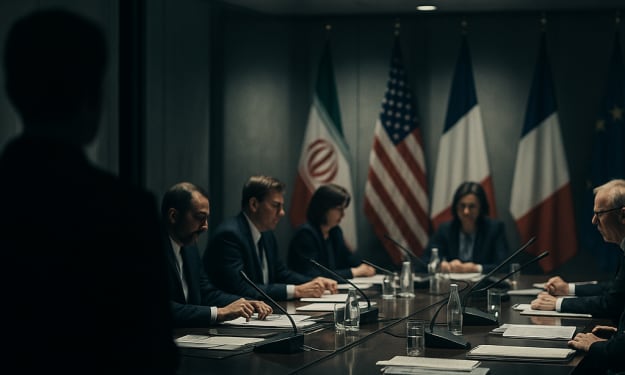
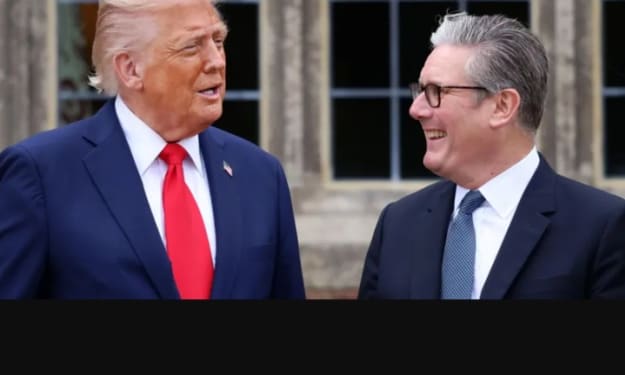
For the best part of 48 hours, first the defence secretary and then the foreign secretary were struggling to cogently articulate in public what the government made of the US and Israel’s attacks on Iran and why. But in the Commons… is not just the opening of an article: it is the snapshot of a defining moment in UK political communication, foreign policy ambiguity, and public expectations of clarity from elected officials in times of international crisis. Over recent days, Britain’s top ministers have found themselves on the back foot — caught between geopolitical alliances, legal ambiguity, and growing domestic unease — as they attempt to explain the government’s posture toward the unprecedented US–Israel military strikes on Iran. . AI-Generated.
In Westminster, during urgent exchanges, MPs pressed the Defence Secretary, John Healey, and Foreign Secretary Yvette Cooper to articulate precisely where the UK stands on what has quickly become one of the gravest confrontations since the 2003 Iraq War. The challenge for ministers has been to walk a tightrope: offering support to longstanding allies while trying to reassure Parliament and the British public that the UK is not being dragged into an open-ended conflict.
By Jameel Jamaliabout a month ago in The Swamp