
Beyond Forever: The Price of Love at Twenty-Five
Falling for a 41-year-old woman who told me: "For fun is fine, but for marriage, no."

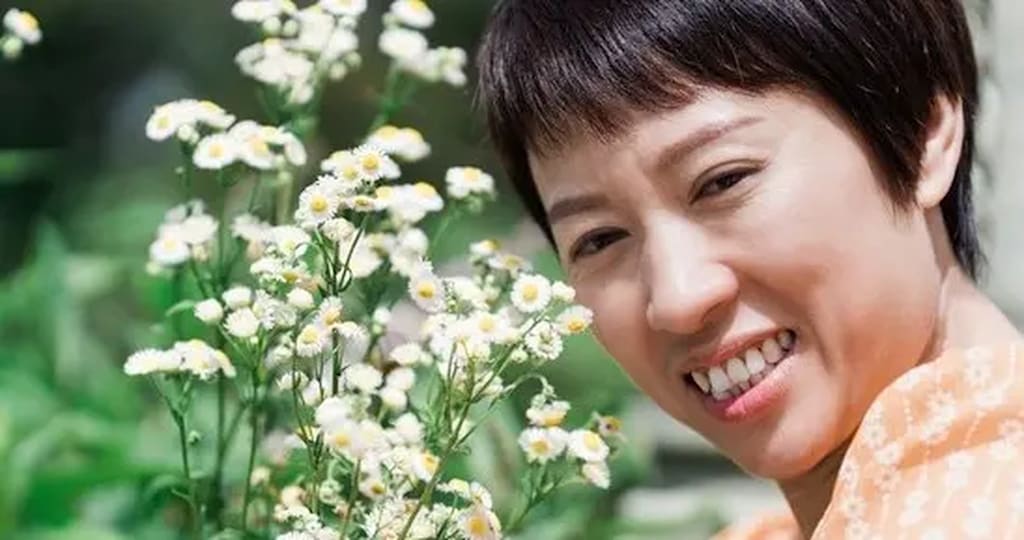
For Fun is Fine, But Not For Marriage
My name is Chen Mo, and I am 25 years old.
I'm not afraid of being laughed at when I say this: I fell in love with a 41-year-old woman. If you had told me this a year ago, I wouldn’t have believed it myself. But it happened—like a train with failed brakes, rumbling toward me and smashing me into pieces.
Her name is Shen Fang.
We met at a dinner party organized by a mutual friend. I was late that day. By the time I pushed the door open, the room was full of people I couldn't distinguish, except for her. She was sitting by the window, idly swirling a cup of tea she’d barely touched, quietly listening to the person next to her brag. She wore a deep blue knit sweater, her hair tied up casually, with hardly any makeup. To be honest, she didn’t strike me as stunning at first glance, but when she smiled, the fine lines at the corners of her eyes made me feel—this person seems very gentle.
The meal lasted over three hours, and I found myself looking her way, consciously or not. When it was time to leave, I added her on WeChat. My excuse was clumsy: "Sister, I've been thinking about changing the curtains at home lately. Your taste is definitely better than mine—maybe you could give me some advice later?"
She looked at me, smiled, and said, "Sure."
Just that one word made my heart skip a beat. Later, I realized she never actually believed I wanted to buy curtains.
During that first month, we talked a lot. From curtains to interior design, from décor to life, and from life to our various messy personal troubles. She knew I was a "drifter" struggling alone in this city, she knew I had a strained relationship with my parents, and she knew my last relationship ended pathetically. Gradually, I learned things about her, too—she had been divorced for three years, her son lived with her ex-husband in another city for school, and she lived alone in an old apartment with a cat, working a decent but unremarkable job.
She was the one who initiated our first private meeting. She said, "Weren't you going to buy curtains? I happen to be free this weekend; I’ll go with you."
We spent the whole afternoon wandering around. We didn't end up buying curtains, but we did have hot pot and watched a movie. On the way walking her home, she walked ahead of me. The streetlights stretched her shadow long, and I suddenly felt a desperate urge to hold her hand. But I didn't dare. I knew clearly that there was a 16-year gap between us. Those sixteen years were like a river, and I didn't know how to wade across.
But she seemed to see through everything.
During our second meeting, she was sitting in my car as I drove her home. When we reached her building, she wasn't in a hurry to get out. After a moment of silence, she suddenly turned to look at me and asked calmly, "Do you like me?"
I was caught off guard; my hands went stiff on the steering wheel. After a long pause, I squeezed out one word: "Yes."
She didn't speak. She looked out the window for about ten seconds before turning back with a smile I still remember clearly—it wasn't joy, nor was it a rejection. It was more like... a helpless sort of tenderness.
She said, "Chen Mo, you're quite cute."
"Cute." The word felt like a basin of lukewarm water poured over me—not cold, but it didn't warm me up either.
But things moved in that direction anyway. She didn't reject me, nor did she formally agree to be with me. We stayed in that "ambiguous" state—what people call aimei—like two fools who both knew exactly what was happening but refused to poke a hole through the paper window pane. She’d order food delivery for me when I worked overtime; I’d stay on the phone with her until 2 or 3 AM when she couldn't sleep. When she had a cold, I rushed over with medicine; she stood at the door wrapped in a blanket, saying "Are you stupid?" in a voice thick with congestion, then let me in.
That was the first time I entered her home. The apartment wasn't big, but it was kept very clean. In the entryway sat a pair of slippers—men's style, brand new. I didn't ask when she bought them, and she didn't explain.
Our relationship continued in this blurred state for nearly four months.
Until that night.
It was my birthday. I had booked a nice restaurant in advance, wanting to treat her to a meal. I had a plan in mind—I wanted to use my birthday as an occasion to formally confess to her. I wanted to tell her that I didn't care about her age, I didn't care that she was divorced, I didn't care that she had a child. I just wanted to be with her, for real.
I even bought a bouquet. Not an exaggerated 99 roses, just a small bunch of white roses. I thought they suited her.
She arrived wearing a white blouse, her hair down, looking a bit more polished than usual. The atmosphere during dinner was wonderful. She gave me a gift—a fountain pen—saying, "Since you like writing, use this." I was overjoyed; I felt like everything was finally right.
After dinner, I drove her home and parked downstairs. I took a deep breath, grabbed the flowers from the back seat, and turned to face her.
"Shen Fang, I have something to tell you."
She glanced at the flowers, then at me. Her expression changed instantly. It wasn't surprise; it was a complexity I can't quite describe—as if she had known this day would come, yet hoped it never would.
"I like you, and not just for fun. I want to be with you, seriously. I know you're older than me, and I know people might gossip, but I don't care. I just want to ask... will you be my girlfriend?"
By the time I finished, my palms were drenched in sweat.
She didn't take the flowers. She looked at me in silence for about thirty seconds. That half-minute felt incredibly long—long enough for me to hear my own heartbeat.
Then she spoke.
"Chen Mo, I’ll tell you the truth. I truly like you. I'm happy when I'm with you. You're young, you have energy, and you're good to me—I know all of this. But—"
She paused, as if organizing her thoughts, or perhaps gathering her courage.
"But, for fun is fine. For marriage, no."
I was stunned.
Truly, it was like a loud "buzz" went off in my brain. All the words I had prepared got stuck in my throat; I couldn't say a thing. I opened my mouth, closed it, opened it again, and finally squeezed out: "What... what do you mean?"
She didn't look at me. She looked down, fiddling with her fingers. Her voice was soft, but every word was piercingly clear.
"I mean, if you want to date, if you want a companion, I’ll be there for you. When you’re happy, come find me; when you’re not, come find me too—I’ll be here. But don’t talk to me about marriage. Don’t talk to me about 'forever.' Those are things I can't give you."
I felt as if a bucket of ice water had been dumped over my head. It wasn't anger; it was utter confusion and a sense of being wronged.
"Why?" I asked. "Do you think I'm acting on impulse? Do you think I'm not serious? Or do you think I'm not good enough for you?"
She shook her head and finally looked up at me. Her eyes were red, but she wasn't crying.
"Chen Mo, it’s not your problem. It’s mine. I’m 41. I’ve been married, I have a child, and I’ve lived through the kind of 'messy reality' that you think you can handle but actually can't. You’re 25; your life hasn't even truly begun yet. Right now, you think love is everything, that age doesn't matter, that you can give up everything for me—but what about ten years from now? Twenty years?"
She took a deep breath.
"I'm 41. In a few years, I might be going through menopause. My energy will fade, and I will age much faster than you. When you’re 35 and in your prime, I’ll be 51. When you take me to gatherings with your friends, people will ask, 'Is this your mother or your sister?' What will your parents think? How will you expect them to explain this to your relatives and friends?"
"I don't care—"
"You will care," she interrupted, her tone suddenly firm. "You think you don't care now because you're caught up in the heat of the moment. Once that rush fades, you will start to care. It's not that I haven't been young; I know that feeling. But I've also been through enough to know what reality looks like."
"I'm not afraid."
"Whether you're afraid or not is one thing; the facts are another," she sighed. "Chen Mo, I’ve been divorced once. I know what marriage is. It’s not something that works just because two people like each other. It involves too much—two families, money, children, the daily grind of 'firewood, rice, oil, and salt,' and the day-by-day erosion of spirit. I worked so hard to crawl out of that quagmire; I don't want to jump back in. No matter who it's with, I don't want to get married ever again."
As she said this, her tone was incredibly calm, like she was reading a verdict she had written long ago. But I could hear what was suppressed beneath that calm—pain, fear, self-protection, and a tiny bit of... lingering regret.
I sat in the driver's seat, still holding the flowers, feeling the absurdity of it all. I had prepared for so long, thought of so many things to say, and in the end, I didn't even get the chance to speak them. She wasn't rejecting me; she was rejecting the institution of marriage. But to me, if you like someone but don't want to marry them, what kind of "liking" is that?
"Then what are we now?" I asked, my voice raspy.
She thought for a moment and said, "We are whatever you want us to be. If you're okay with this, then we continue. If you're not, then let’s forget it. I won't force you."
"So what you're saying is, I can sleep with you, I can be with you, but I should forget about ever marrying you?"
The words came out harsher than I intended. But she didn't get angry. She just looked at me with a heart-wrenching kind of tolerance in her eyes.
"That's about it. I know it sounds bad, but I don't want to lie to you. I don't want to give you hope only to let you down in the end."
After she got out of the car that night, I sat there for a long time. The flowers sat in the passenger seat, the white roses looking a bit yellow under the streetlights. I rolled down the window and lit a cigarette—I don't actually smoke, but I had bought a pack on a whim at a convenience store earlier.
By the time the pack was empty, I still hadn't figured out what to do.
In the days that followed, things between us became strange.
She didn't distance herself, nor did she try to be closer; we still talked, ate together, and shared occasional moments of intimacy. But there was a thorn in my heart. Every time I did something nice for her, a voice in my head would say: "No matter how good you are to her, she won't marry you." And every time she was gentle with me, that voice would say: "She just sees you as a playmate."
I became anxious about the "gains and losses" of the relationship. Sometimes I felt pathetic—she had laid it all out, so why was I still hanging around? But other times, I felt her words weren't entirely because she didn't love me, but because she was afraid. Afraid of getting hurt, afraid of trouble, afraid of repeating past mistakes. If I truly loved her, shouldn't I give her time to slowly change her mind?
I tried. I tried for two months.
During those two months, I behaved even better than before. I fixed her leaking faucet, helped her take the cat for vaccinations, picked her up when she worked late, and took her for drives when she was in a bad mood. I even secretly researched articles about how couples with large age gaps manage, how to communicate with parents, and what to watch out for in remarriage. I wanted to show her that I wasn't just "hot-headed"—I had actually thought about these issues.
But every time I felt the mood was right and wanted to talk about it again, she’d shut me down with a single sentence.
Once, I was walking her home and couldn't help but hug her in the hallway. She didn't push me away, but she didn't respond either. She just stood there and let me hold her for a while. Then she patted my back, like she was comforting a child, and said, "Alright, go on home. You have work tomorrow."
I said, "Shen Fang, can you stop treating me like a kid?"
She paused, then said very softly, "But you are a kid."
That sentence stung deeply. Not because she was wrong, but because she was so right. In her eyes, I might always be a kid—one who acts on impulse, who can't distinguish between love and possession, and who mistakes passion for eternity.
But I'm not. I'm really not.
The turning point happened last month.
I had worked late and was too tired to move when I got home, so I just lay on the sofa scrolling through my phone. Suddenly, I saw her post on WeChat Moments—a photo of a glass of red wine and an open book, with a caption of just two words: "Tired."
I messaged her, asking what was wrong. She said it was nothing, just work stuff, plus her son hadn't been listening lately, and her ex-husband had called to lecture her, leaving her feeling suffocated.
I said I’d come over. She said no, it was too late. I said I wasn't at ease. After a silence, she replied with one word: "Okay."
When I arrived, it was nearly 11 PM. She opened the door wearing an old bathrobe, her hair messy, her eyes swollen—she had clearly been crying. That glass of wine was on the coffee table next to a box of tissues.
I didn't say anything; I just sat on the sofa. She sat down too, and we just sat there in silence. After a long while, she finally spoke.
"Chen Mo, do you know why I don't dare to take you seriously?"
I stayed quiet, waiting for her to continue.
"It's not because I don't like you. It's because I know that if I take it seriously, I'm finished."
She turned to look at me, tears falling.
"You know the kind of person I am. I'm actually not that strong. When I got divorced, everyone thought I had pulled through, that I was fine. But only I know that I stayed in bed for three months and lost twenty pounds. I’m not afraid of another divorce; I’m afraid that if it happens again, I won't be able to get back up."
"You're young; you can handle the turbulence. Even if you date me for three or five years and we break up, you'll only be in your early thirties; you'll have plenty of time to start over. But I'm different. I'm 41; I don't have that much time left. If I take you seriously, put all my heart into you, and then one day you tell me 'I'm sorry, I can't handle the pressure'—then what do I do?"
She wiped her tears with the back of her hand, a gesture like a child's.
"It's not that I don't believe in you; it's that I don't believe in time. You're 25 and say you aren't afraid—I believe you truly aren't afraid now. But what about 35-year-old you? 45-year-old you? When you see all your friends with younger wives and children, and your parents are pressuring you to carry on the family line, what will you do? Will you regret it? And after you regret it, what happens to me?"
Listening to every word she said, I felt as if my throat were being squeezed.
I wanted to argue, to tell her it wouldn't be like that, that I wasn't that kind of person. But the words wouldn't come out. It wasn't because I was lying, but because I suddenly realized—she was right. It wasn't that I didn't believe in myself; it was that I couldn't guarantee anything on behalf of my ten-year-older self.
No one can.
In that moment, I truly understood. She wasn't rejecting me; she was rejecting herself. It was her way of protecting herself, her last shred of security in life. She wouldn't marry me not because she didn't love me enough, but because she knew too well how unreliable "love" could be. She couldn't afford the gamble anymore.
I didn't leave that night. We leaned against the sofa, her head on my shoulder, my arm around her. We didn't talk much. The TV was on, playing some boring variety show that neither of us watched.
Near dawn, she murmured something almost inaudible in her sleep.
"If only you were a forty-year-old man, how wonderful that would be."
I smiled, but as I did, my eyes grew hot.
The next morning, she got up as usual to make breakfast—fried eggs, warmed milk—acting as if nothing had happened. Sitting at the table, watching her busy back, I suddenly felt incredibly peaceful.
I had figured it out.
What I figured out might be a bit different from what she thought.
I didn't pressure her anymore. I didn't ask "what are we" anymore. I didn't tell her "I’ll wait for you to change your mind." Those words are too heavy; she can't carry them, and I didn't want to add to her burden.
I just continued to be good to her. Not the kind of "good" that says "I must move you so you'll marry me," but simply—I just want to be good to her. Because I'm happy when I'm with her, because she deserves to be treated well, and because even if we part tomorrow, I want to make her smile today.
As for the future, who can say?
She might never marry me. She might one day meet a man her own age and feel that’s more stable, then let me go. It’s also possible that over time, she’ll realize I’m not just acting on a whim and become willing to believe one more time. But that’s for later; it's not something I can control today.
The only thing I can control is that I am here today, I am by her side, and I still like her.
I saw a quote on my feed the other day: "For some people, just meeting them is already a gain." I used to think that kind of talk was sentimental nonsense, but now, I think it might be true.
Shen Fang is probably that person I "gained." No matter how we end up, she taught me one thing—liking someone doesn't require a specific result to "count." The process itself is the answer.
I still think about marriage occasionally. But instead of "Why won't she marry me?" I think, "If she really did marry me, what could I give her?" That question is much harder and much more real than the first one.
I haven't found the answer yet. But I am thinking about it.
And that is enough.
As for those white roses I never "officially" gave her—I eventually put them in a vase at her house. She didn't say anything, but she didn't throw them away either. Those flowers stayed in bloom for over a week. Even when the petals began falling one by one onto the coffee table, she couldn't bring herself to clear them away.
I think some things don't need to be said too clearly.
The flowers know, and she knows too.
About the Creator
Water&Well&Page
I think to write, I write to think
Keep reading
More stories from Water&Well&Page and writers in Writers and other communities.




Comments (1)
🎴🎴♦️♦️🃏🟩🟪🟥🟧🟨🟨🟨🟧🟥◻️◼️🔲🔲🔔🔔🔔🎴🎴🀄️🎴🎴🎴♦️♦️🃏🟩🟪🟥🟧🟨🟨🟨🟧🟥◻️◼️🔲🔲🔔🔔🔔🎴🎴🀄️🎴🎴🎴♦️♦️🃏🟩🟪🟥🟧🟨🟨🟨🟧🟥◻️◼️🔲🔲🔔🔔🔔🎴🎴🀄️🎴🎴🎴♦️♦️🃏🟩🟪🟥🟧🟨🟨🟨🟧🟥◻️◼️🔲🔲🔔🔔🔔🎴🎴🀄️🎴🎴🎴♦️♦️🃏🟩🟪🟥🟧🟨🟨🟨🟧🟥◻️◼️🔲🔲🔔🔔🔔🎴🎴🀄️🎴🎴🎴♦️♦️🃏🟩🟪🟥🟧🟨🟨🟨🟧🟥◻️◼️🔲🔲🔔🔔🔔🎴🎴🀄️