Latest Stories
Most recently published stories in Critique.
Do Not Enter Review: When the Price of Fame Is Too High
Do Not Enter, directed by Marc Klasfeld, is a horror film that dives into the world of urban exploration, blending supernatural elements with the thrill of adventure. The film follows a group of young explorers, known as the Creepers, who venture into the abandoned Paragon Hotel, drawn by its dark history and the promise of hidden treasure. However, their quest quickly turns into a nightmare as they encounter supernatural threats and rival explorers.
By Ninfa Galeanoabout 3 hours ago in Critique
Customer Service . Content Warning.
Ever wake up to a bunch of illegitimate fees? Bank, phone company, car rental, airline, credit card, utility company, etc.? It happens to everyone. And when it does, we call customer service, possibly further infuriated by annoying robot systems designed to keep you from speaking to a real person and impossibly long wait times once you’re allowed to enter the queue of angry customers demanding service. It’s exasperating.
By Harper Lewisabout 10 hours ago in Critique
Oscars spark debate after 'KPop Demon Hunters' acceptance remarks cut short....
The 2025 Academy Awards were meant to be a night of celebration, but for many viewers, one particular moment sparked an unexpected wave of criticism. The spotlight fell not just on the winners, but on how their victories were handled—especially during the acceptance speeches for the animated hit KPop Demon Hunters.
By Shirley Oyiadomabout 21 hours ago in Critique
45, 47, and It Too Shall Pass
The forty-seventh American president wears hats that say “45-47,” as if he also were the forty-sixth. But that was Joe Biden. It should be “45, 47,” you ignoramus. Forty-seven also hopes he will be the forty-eighth and forever president. If he pulls it off, we’re all screwed.
By Lana V Lynxa day ago in Critique
Illumination recruit rapper ‘Yeat’ for ‘Minions & Monsters’
According to reports, hip-hop sensation Yeat has been added to the cast of ‘Minions & Monsters’. In only a few short years, the ‘COME N GO’ rapper has gone from underground underdog to mainstream megastar, with hits like ‘IDGAF’, with Drake, ‘Out the way’, ‘If We Being Real’ and ‘Money so big’ cementing the California native as a force to be reckoned with in the music industry.
By Theo Grinta day ago in Critique
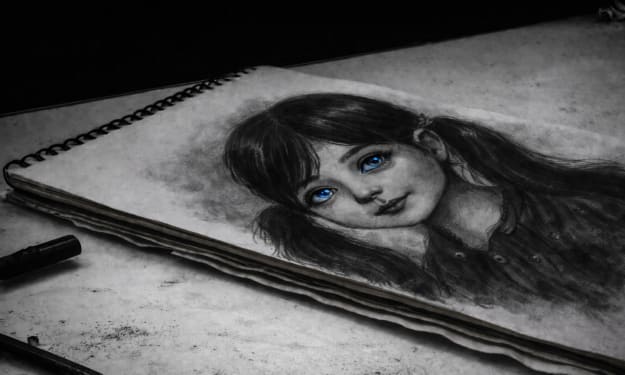
Piergiorgio Corallo in blue
Photography often reveals more by removing elements than by adding them. In the photographic series Nel blu dipinto di blu this idea becomes the central visual strategy. The images are built around a simple but striking rule: almost everything appears in black and white, while a single blue element remains visible inside the scene.
By The Global Verge3 days ago in Critique
Civilization Is A Disease
Civilization Is A Disease ‘Civilization is a disease produced by the practice of building societies with rotten material.’ George Bernard Shaw placed that line in ‘Maxims for Revolutionists’, appended to Man and Superman, and the sentence still shocks because it does not merely criticise modernity; it pathologises it. Shaw, a leading Fabian and public intellectual, belonged to a reformist socialist milieu that believed society could be engineered gradually and rationally from above. Yet that same rationalist confidence often shaded into something darker: population management, elite planning, and the fantasy that humanity itself could be improved by sorting, disciplining, breeding, excluding, and sometimes eliminating the ‘unfit’. Shaw’s line can therefore be read not only as a critique of civilization, but as an unwitting confession about one of civilization’s recurring diseases: the educated elite’s urge to redesign humanity. ([online-literature.com][1])
By Peter Ayolov3 days ago in Critique
“Distorted Communication”
“Distorted Communication” In his 1991 book The Structural Transformation of the Public Sphere: An Inquiry into a Category of Bourgeois Society, Jürgen Habermas presents the Enlightenment as a time for change—a pivotal moment when humanity began transitioning from self-imposed immaturity to a state of maturity. In this mature state, individuals must use their reason in public discourse. Habermas envisioned a society where every person becomes a public intellectual, communicating ideas openly to the world. Today, this vision is partially realized through online media, where anyone can publish their thoughts globally. However, the rise of this communication medium has also fostered a climate of dissent, with the collision of countless perspectives creating tension rather than unity. The transformation of global communication into an international open-access platform is a defining event of the 21st century, symbolizing humanity's step toward intellectual maturity. Yet, this journey is hindered by the planned obsolescence of communication, a kind of intellectual adolescence that prevents full independence and fosters the "manufacture of dissent."
By Peter Ayolov4 days ago in Critique